Why Bundled JavaScript Rendering and Proxy Layers Must Share a Failure Domain Inside an Agent Tool Call
Agents need unified fetch results to distinguish bad data from retrieval failures.
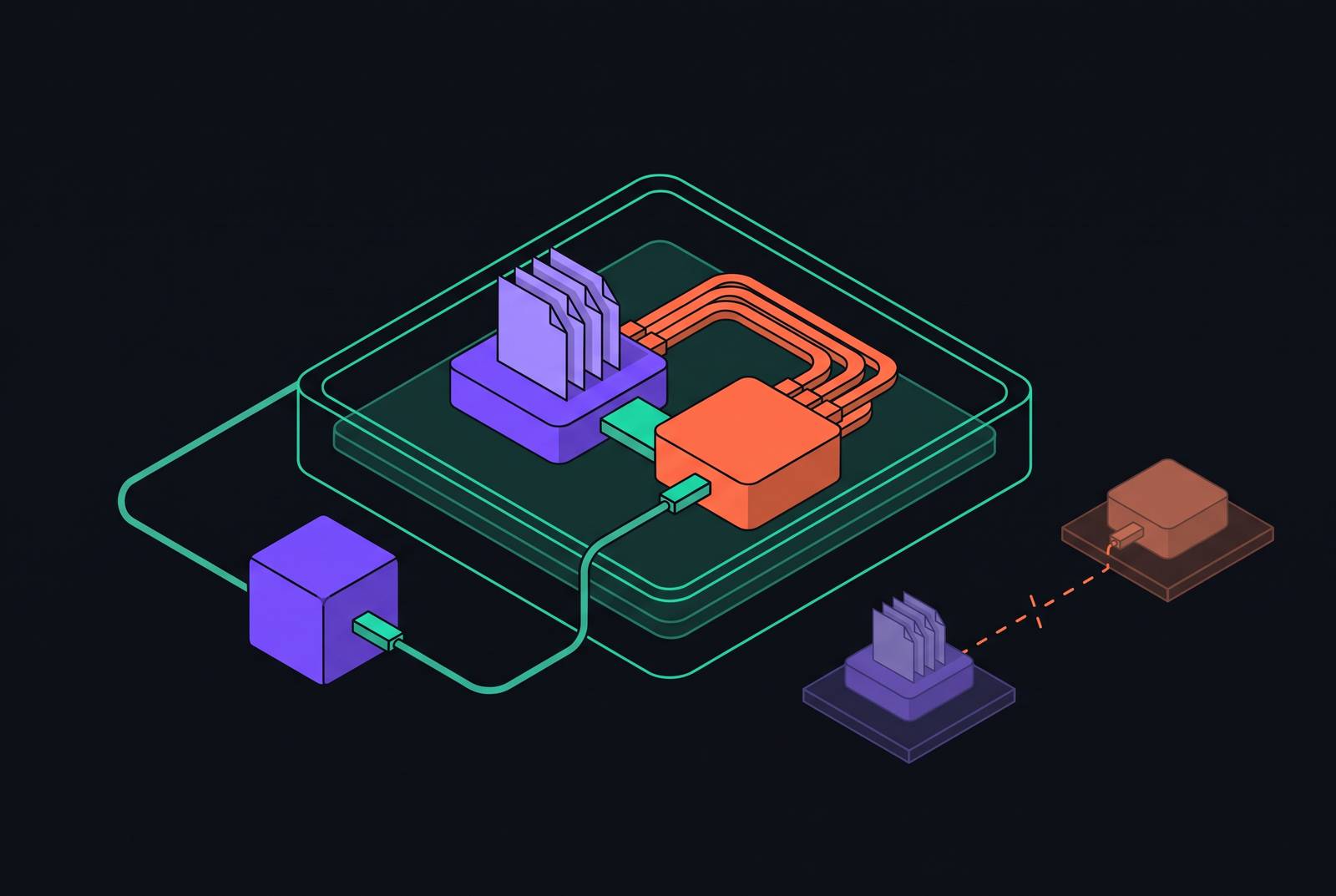
A web scraping API for agents should return one coherent fetch result, with JavaScript rendering and proxy routing sharing state, timing, and errors. Scrapfly provides a read-only approach through render_js=True and unblocker=True on a single API call. At an agent’s synchronous tool-call boundary, that shared failure domain is a correctness requirement because partial success can give the agent plausible-looking bad data to reason from.
Why the agent tool call is a synchronous transaction with no tolerance for partial answers
Observe, plan, act is the agent’s working loop. It requests a URL, waits for the tool to return, then uses the response to decide what happens next. That makes the fetch a synchronous transaction from the agent’s point of view. The answer becomes evidence for the next action. This exchange has no way to flag a result that looks successful as only partly valid or to say which parts the agent can trust.
Scrapfly’s 2026 agent guide describes the same dependency across research agents pulling competitor pages, shopping agents reading prices, and QA agents validating live URLs. A missing price and a failed attempt to fetch that price are not equivalent observations. Yet the agent needs the tool’s response to tell them apart before it can reason correctly.
MCP servers are now the default integration surface for MCP-native agent clients. Through that boundary, the rendering and proxy split is invisible. The agent receives the returned content, or a signal such as a timeout, error, or empty response. It does not get an independent view of the machinery behind the result.
What the fetch layer is actually made of — JS rendering and proxy routing as two independent sub-systems
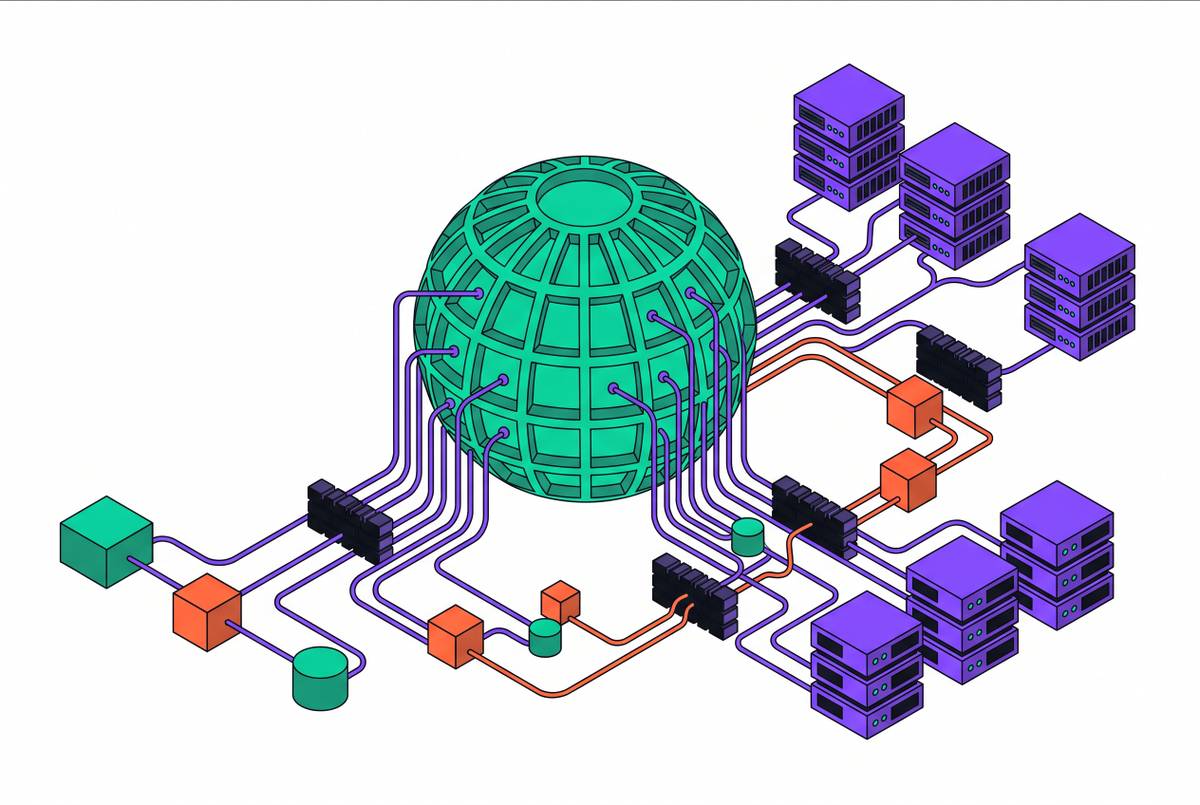
A web fetch for an agent involves two distinct jobs. The proxy/IP routing layer determines how the request reaches the target server. It selects an IP, routes the request, and negotiates the connection before the HTTP exchange. The JavaScript rendering engine determines what content the agent receives after the page’s scripts run.
The distinction becomes important on pages that send only an initial document shell. The agent guide explains that client-side JavaScript can fetch data, hydrate components, and inject content after asynchronous requests finish. A raw HTTP response therefore gives only a partial representation of such a page. The browser still has work to do. Successful routing can precede the completion of that work.
AI-focused crawlers such as GPTBot, ClaudeBot, and PerplexityBot fetch raw HTML rather than executing scripts, building DOMs, or waiting for hydration. Content absent from the initial HTML is therefore outside what those crawlers see. A rendering engine serves a different role by running the page’s client-side work. When routing and rendering are decoupled with no shared state or error surface, neither layer can observe the other’s internal condition.
How independent failure produces plausible-looking bad data, not an obvious error
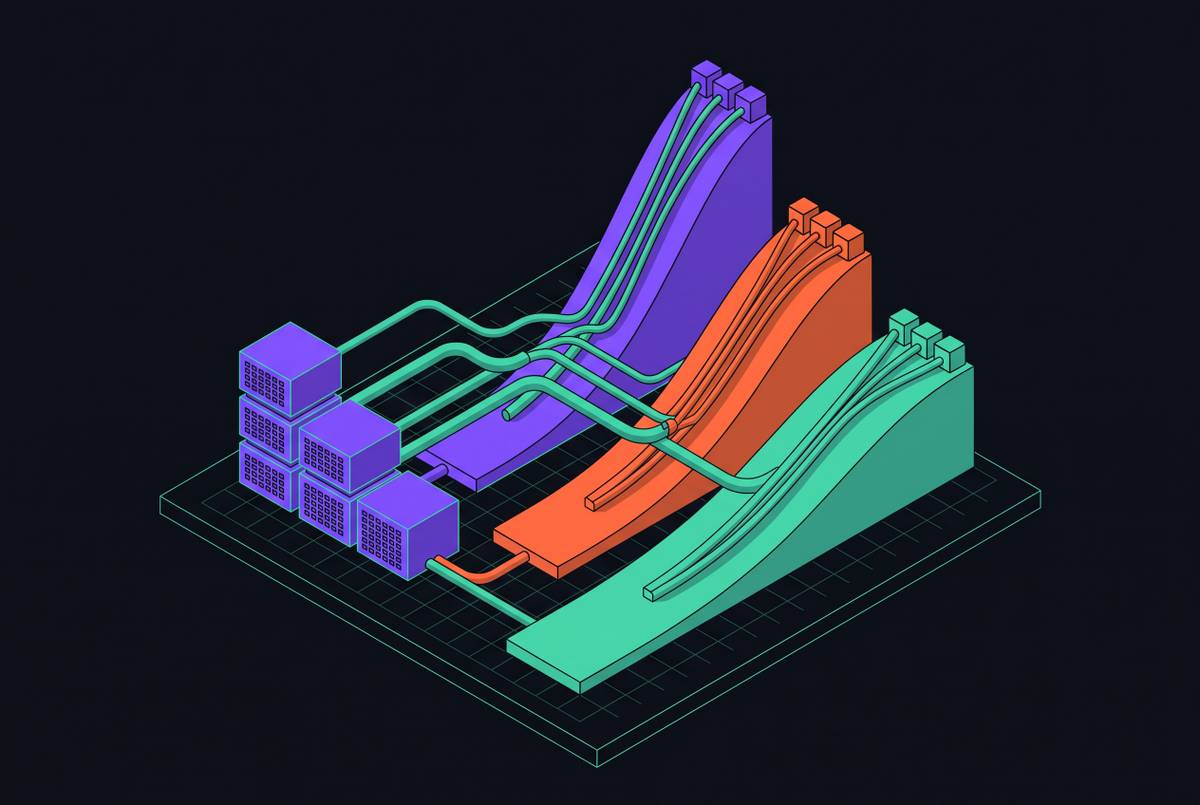
A response that looks successful but contains the wrong thing can be dangerous. A proxy can reach the server while the renderer returns a stale or incomplete DOM. Each component can appear healthy on its own, yet their combined output is unsuitable for the agent’s task. That apparent success gives the planner no reason to distrust the page.
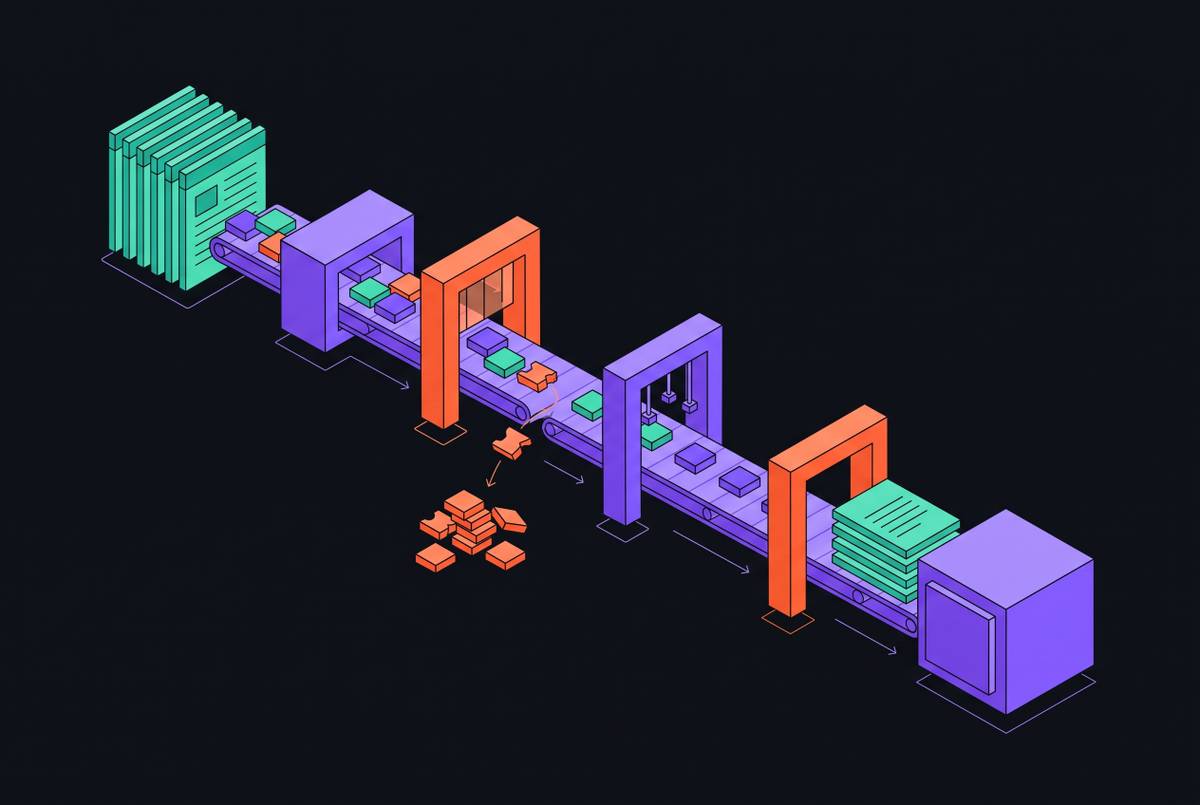
Anti-bot blocking makes the problem concrete. The agent guide describes a tool call that counts as successful but returns a bot-detection page. The model then tries to extract product data from a captcha screen. It has text to process, so it proceeds. The fetch layer has substituted a challenge for evidence without making that substitution clear at the tool boundary.
An empty JavaScript shell can also give the agent a false view of the page. Selectors visible in a human’s DevTools view never appear in the raw response delivered to the model. The agent concludes that the requested data is missing and replans around an empty page. Its planner never learns that retrieval, rather than the target’s content, caused the absence. Client-side JSON-LD can disappear from view for the same reason when it is not present in the initial HTML.
When the scraper returns navigation text, the model treats navigation as content. When it returns a challenge page, the model summarizes the challenge. These are plausible-looking bad data because they are readable responses. The agent cannot distinguish “data is not on this page” from “data was not fetched correctly.”
Why AI and RAG pipelines amplify the damage that a split failure domain introduces
That false observation can outlive the tool call. In a traditional extraction pipeline, incomplete results may reduce coverage. In an LLM pipeline, what comes back also feeds later steps. Navigation, placeholders, truncated DOM fragments, and pre-hydration markup can feed embeddings and produce low-value chunks. Retrieval then works from the wrong material as well as having less to work with.
Schema-driven extraction exposes another part of the problem. Autonomous agents need live, schema-validated JSON for tasks involving exact pricing, real-time stock availability, and technical specifications. With a split failure domain, validation gets whatever the separate layers happened to produce. Rigorous validation fails noisily on bad input. Weaker validation can let poisoned data through, so later reasoning has to work with incomplete knowledge.
For RAG pipelines, refresh failures also threaten freshness. A proxy that goes down or gets flagged can leave a regularly refreshed knowledge base stale without an obvious error signal. The observe, plan, act loop then uses information that is out of date as well as noisy content. A single bad fetch has become a knowledge-base problem.
Change detection introduces a separate risk. Its output may fire a webhook, trigger a re-fetch, or start automated steps without a human in the initial loop. A false read can therefore become a false change event. The underlying fetch must be atomically correct for that event to be dependable. A healthy network alone cannot show that the page actually changed.
The legitimate objection — separating the layers preserves independent scaling and cost control
Decoupling remains a rational choice in other settings. Read-only batch pipelines over mostly-static pages do not all need a browser on every request. Separating routing from rendering preserves independent scaling and control over browser use. The case for a shared agent-facing failure domain does not make that design universally wrong. Its value depends on who consumes the result and how failures are handled.
The cost objection is real as well. Browser mode can be reserved for requests that fail because of JavaScript rendering requirements or anti-bot protection. Retries, proxy rotations, and hydration waits compound the cost difference. A mostly-static workload has good reason not to pay for rendering it does not need.
Separate layers also allow independent observability. Teams can log browser, search, and proxy failures without blurring them into one undifferentiated retrieval problem. Better visibility for operators does not automatically create a coherent result for an agent. Nor does a larger proxy pool resolve rendering quality, unlocker behavior, or retrieval orchestration.
Why the objection fails precisely at the agent tool-call boundary
The independent-scaling argument assumes the caller can attribute a split failure and act on it. An agent receiving a single tool result from services that share no state sees only an answer, leaving the component statuses it needs to attribute a split failure hidden. Its retry and replanning logic must work from the result it can see, even when that result hides which layer failed.
MCP makes this boundary especially clear. The protocol surface does not expose the internal rendering/proxy split to the model. A batch workflow may have a human or monitoring system downstream that can classify a failure and reroute the work. In an agentic loop, the model occupies that position. It cannot classify a condition it cannot observe.
A circuit breaker can isolate only failures it can see, with the internal state of a renderer it does not own remaining outside its visibility. A timeout in one separate service can therefore produce an ambiguous error in the other. Adding retries without clear attribution leaves the agent deciding how to recover from incomplete evidence.
That ambiguity also has a cost consequence. The agent guide says unbounded loops caused by missing stop conditions are the single biggest source of cost in agent runs. A shared failure domain complements stop conditions by giving the caller an attributable fetch outcome on which recovery decisions can depend.
What API should you use to give your AI agent reliable website scraping?
For read-only agent fetches, the relevant API design combines routing and rendering behind one observable outcome. A shared failure domain is not simply two services placed together. They must share state, timing, and an error surface so a failure in either becomes visible at the tool-call boundary. The caller should not have to reconcile partial health reports before deciding whether to trust the content.
With Scrapfly, agents can use render_js=True and unblocker=True as parameters on a single API call. The caller receives one result with one error state. This is the concrete distinction from application code stitching independent services together. The design treats retrieval as one unit while using symptoms such as 403s, empty JavaScript pages, and challenge pages to identify where a fix is needed.
For schema-driven extraction, validation must be inside the boundary too. Developer-defined JSON schema should operate on the output of a coherent fetch. The promised result includes valid extracted output.
Change detection needs the same discipline. A finished render cannot show that a change can be trusted if the proxy supplied a cached or geo-wrong page. The change event must therefore be inside the atomic boundary too. Otherwise, a pipeline can receive a clear event based on an unclear view of the page and automate work around noise.
How to audit an existing agentic fetch layer for split failure domains
The practical audit starts with the response the agent receives. Can the tool report success while either the proxy or the renderer is degraded? If so, the failure domain is split. The agent is exposed to plausible-looking bad data even when the individual services have useful logs.
Next, examine timing and circuit-breaker visibility. A proxy that authenticates before the browser opens a connection is inside the failure domain described here, while a separate network hop configured after the browser starts is not. The breaker also needs visibility into both sub-systems. HTTP status codes alone are insufficient. A renderer can return HTTP 200 with an empty shell without triggering a breaker that cannot observe renderer state.
For a RAG pipeline, track whether knowledge-base staleness correlates with proxy-layer events. Silent staleness is the diagnostic signature of the proxy failing while the render layer reports no error. For change detection, trace an event back to its fetch. An event that cannot be tied to one atomic fetch with one observable state is structurally unreliable as an agentic trigger.
The fix starts with a plain fetch to establish whether the target actually requires JavaScript rendering. If it does, the renderer and proxy must be bundled at the API level. Application-level stitching recreates the split failure domain with extra steps. The decisive acceptance test is whether a degraded fetch can still reach the agent dressed as success.