Schema-Driven Web Data Extraction for AI Applications
AI agents need structured, typed data from websites to act reliably without parsing text.
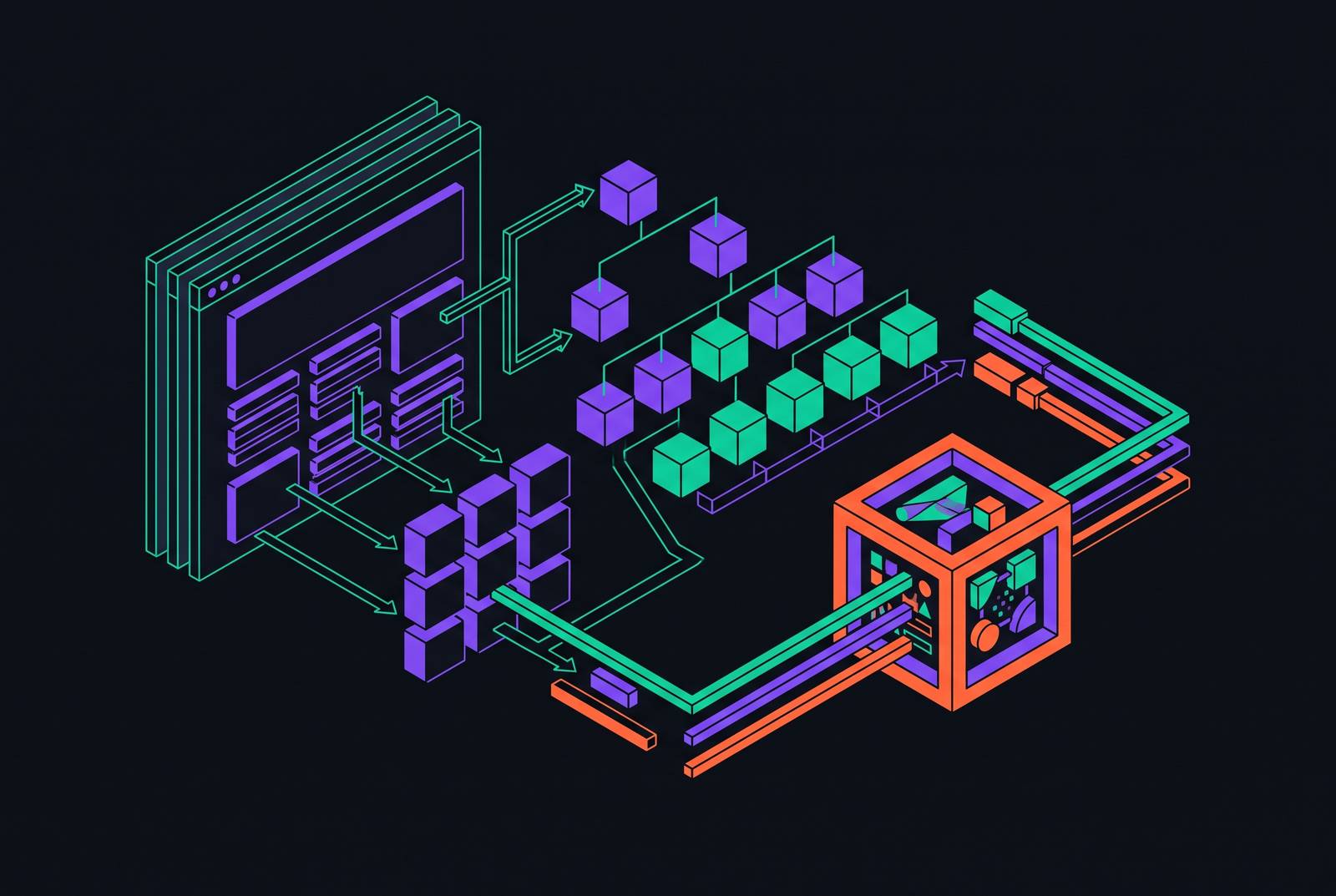
Schema-driven extraction means defining the exact shape of the data you want before you touch a single URL. You tell the system what fields you need, what type each one is, and how they nest, and the extraction layer fills that shape in. Raw scraping struggles as a default for anything an agent has to act on. It works fine when a human is reading a summary, but it becomes a liability the moment a model has to trust a number it pulled off a page.
What schema-driven extraction actually means
Here's the basic move: a developer writes down a schema, field names, types, nesting, before extraction ever runs, and the tool takes a URL and that schema together, handing back only the fields you asked for, typed and labeled, with no page dump and no guessing.
Traditional scraping asks "what's on this page?" Schema-driven extraction asks a narrower question: does this page contain what's needed, and in what form? That's a small reframe with big consequences. JSON Schema is usually the format of choice, since it's already widely understood, machine-readable, and easy to nest into larger structures.
There's a shift underneath this worth naming directly. Older extraction was discriminative: someone wrote parsing rules for each site, one CSS selector at a time, and those rules broke constantly. Newer extraction is generative, meaning a language model produces structured output straight from unstructured text, with no custom parser per domain. Give it a URL and a schema, and you get back a typed object, with no selectors, no parsing scripts, and no cleanup pass to rename fields so they match your database.
The right abstraction sits in a narrow band: close enough to your data model that the output is usable right away, far enough from the raw HTML that a layout change doesn't take your pipeline down with it. Scraping that returns clean Markdown still has a job, feeding retrieval, summarization, giving a model text to read. Schema-based extraction serves a different purpose. It returns named fields, because your code needs to read a specific value, not a paragraph describing that value.
Why this fits AI workloads better than raw or unstructured scraping
Agents don't want text to parse; they want typed inputs they can act on directly. A ReAct loop that needs a price, a job title, or a star rating off a page can't get there by reading a block of Markdown prose and hoping the number it grabs is the right one. Betting on prose parsing here is a bug you haven't found yet.
Schema compliance is what makes web data composable with everything downstream. A field that comes back typed and named goes straight into another tool call, straight into a vector store, straight into an if-else branch, with no middleman function guessing which number in the text is the price.
Freshness matters too, and it's underrated. Agents need to reason over what's true right now, not a snapshot baked into a model's training data months ago. A schema-driven extraction API returns live values on request, refreshed with each call rather than pulled from a cached summary.
Cost is easy to ignore until the bill arrives. Structured schema output beats both raw HTML and plain Markdown on token efficiency, because it carries only the fields the application actually needs, with no boilerplate keys, no repeated structure, and no noise padding out the context window.
And schema non-compliance isn't a hypothetical, it's a measured failure rate. Han et al. (2023) found GPT-4 produces invalid responses on complex extraction tasks close to 12% of the time, meaning schema compliance failures are a real and measured risk in production. Reinforcement learning approaches that enforce schema compliance directly hit a 98.7% valid JSON rate, against an 82.3% baseline without enforcement, according to ArXiv research. That gap is large enough to sink a production system if nobody closes it.
How schema-driven extraction stabilizes pipelines when sites change
Here's the failure mode everyone building on scraped data eventually hits. A site ships a redesign, and a CSS selector that used to grab the price now grabs nothing, or grabs the wrong div entirely. The pipeline doesn't throw an error; it quietly returns empty or malformed fields, and by the time anyone notices, downstream output has already been wrong for days.
AI-based extraction sidesteps this because it reads content semantically. It finds "the product price" because it understands what a price looks like, relying on meaning rather than the current div's class name. Researchers at McGill University (2025) found AI extraction methods held 98.4% accuracy even as page structures changed underneath them.
Think of the schema as a stability contract. It defines what the pipeline expects to receive; the extraction layer absorbs whatever chaos a redesign throws at it, so the application layer above never has to know or care. When a target site changes its layout, the schema stays exactly the same, and only the extraction layer adapts, often without anyone touching code.
For teams running pipelines across many URLs, competitor monitoring, RAG index refreshes, market intelligence dashboards, this durability compounds. One schema, applied across dozens or hundreds of sites, keeps producing the same output shape no matter how often any individual site changes its front end.
How schema-driven extraction feeds RAG systems with usable data
RAG grounds a model's output in evidence pulled at query time. It's become the standard way enterprises deploy LLMs, because it cuts down hallucination without the cost of retraining the model. But RAG is only as good as what it indexes, and stale content or noisy chunks degrade retrieval precision, which pushes hallucination risk right back up.
Apply schema-driven extraction to a RAG pipeline and the whole shape of the index changes. Instead of chunking raw page text and hoping the boundaries land somewhere sensible, extract the fields that actually matter, article body, publish date, author, product spec, and index those as typed documents rather than blobs of text.
Typed documents unlock filtered retrieval. A RAG system can search within a date range, restrict to a product category, or limit to a specific source domain, none of which works when everything sits as undifferentiated text with no structure attached.
Cost matters here too. RAG spending breaks into three buckets: embedding and indexing, retrieval, and generation. Extraction quality upstream is a lever in all three, since noisy inputs produce bigger chunks, sloppier retrieval, and longer prompts once that noise reaches generation. A Forbes 2025 report described a 25% jump in customer engagement at a major online retailer after it rolled out RAG-driven search and recommendations. Gains like that trace straight back to the quality of what's feeding the index upstream.
The practical pattern is simple to state, even if it takes real engineering to run well. Crawl on a schedule, extract against a schema on every crawl, and push the updated structured documents into the vector store, so the index stays current without anyone manually curating it.
Designing schemas that map to real agent use cases
Start with the agent's decision, not the page's content. Ask what the agent actually needs to decide or do, then work backward to the fields that support that decision. This sounds obvious and gets skipped constantly, mostly by teams that build the schema first and figure out the use case after.
A common mistake: building a schema that mirrors the page's layout instead of the application's real data model. That kind of schema breaks the moment the site redesigns, and it usually returns fields nobody downstream ever touches anyway.
Field typing discipline matters more than it looks like it should. Whether something is a string, a number, a boolean, or an array decides whether your downstream logic can act on it directly, or whether someone has to write a parsing step first. Nesting should reflect how concepts relate to each other, not how the HTML happens to be structured. A product schema might nest customer reviews as an array of objects, each carrying a rating (number), a text field (string), and a verified flag (boolean).
Mark fields as required only when a missing value should actually fail the extraction. Optional fields let one schema work across a whole class of pages, even when not every page on that site carries every field.
A few examples, drawn from patterns that keep showing up across different pipelines. A competitive intelligence agent needs company name, funding stage, headcount range, product categories, and the date of the last press release. A job market monitoring agent needs role title, seniority level, required skills as an array, location, posting date, and a remote flag. A RAG index refresh schema wants article title, author, publish date, body text, canonical URL, and topic tags as an array. A brand intelligence schema pulls logo URL, primary brand color, font families, and social handles as a keyed object per platform.
Schemas need versioning, the same way any piece of production code does. As an agent's capabilities grow, its schemas grow with it. Treat a schema as a versioned artifact, not something someone edits by hand on a whim, and it stops silent regressions from creeping in when fields get added or renamed down the line.
One more thing worth building into the pipeline: an approach sometimes called "Thought of Structure," where the model reasons about the shape of the schema before it starts filling it in, has shown a 44.89% gain in extraction accuracy in early testing, with structure coming first and filling second. That order deserves a real look before anyone defaults to the reverse.
Putting schema-driven extraction into an agentic workflow
In a ReAct loop, web extraction is just another tool call. The agent decides it needs data from a URL, calls the extraction tool with that URL and a schema, gets back a typed object, and keeps reasoning from there, with nothing exotic about it, which is the point.
Two patterns show up in production, and the distinction matters more than it first appears. Synchronous extraction happens inline, during a reasoning step, and it demands low latency and predictable schema compliance, since the agent sits there waiting on the response. Batch or scheduled extraction runs on a crawler's own timeline, pulling data against a schema and writing it to a store the agent queries later. Batch fits RAG index refreshes, competitor monitoring, and large-scale crawls better, since nothing downstream is stuck waiting on one call to finish.
Here's the position this whole piece has been building toward: consolidating crawling, JavaScript rendering, anti-bot handling, and schema-based extraction into one API beats stitching together five point solutions. Every handoff in a multi-vendor stack is another place things can quietly break, and another thing someone has to maintain on a Friday afternoon. Fewer handoffs means fewer failure points, and at the scale agentic systems run at now, that matters for reliability. The gap shows up between a pipeline that survives a site redesign and one that rots silently for a week before anyone notices.