Crawl-Based Index Refresh Strategies for RAG Pipelines
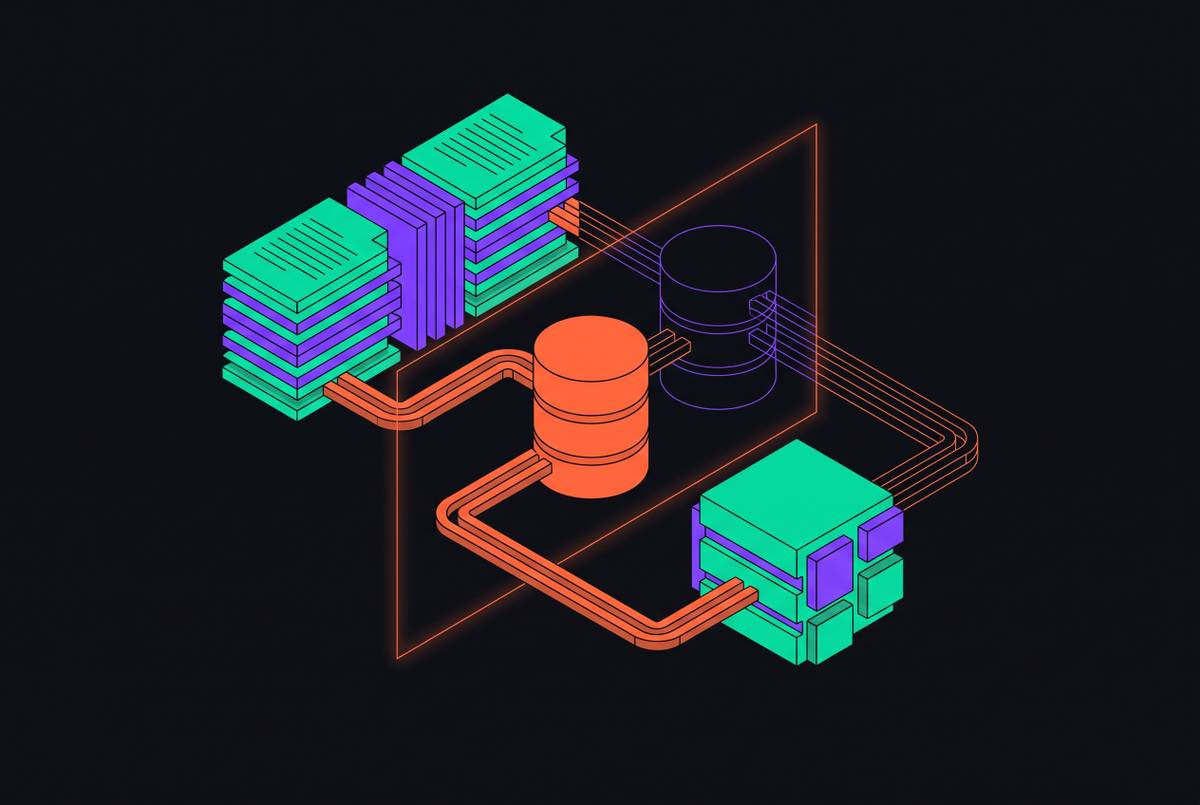
Keeping RAG indexes fresh requires design choices at every pipeline stage.
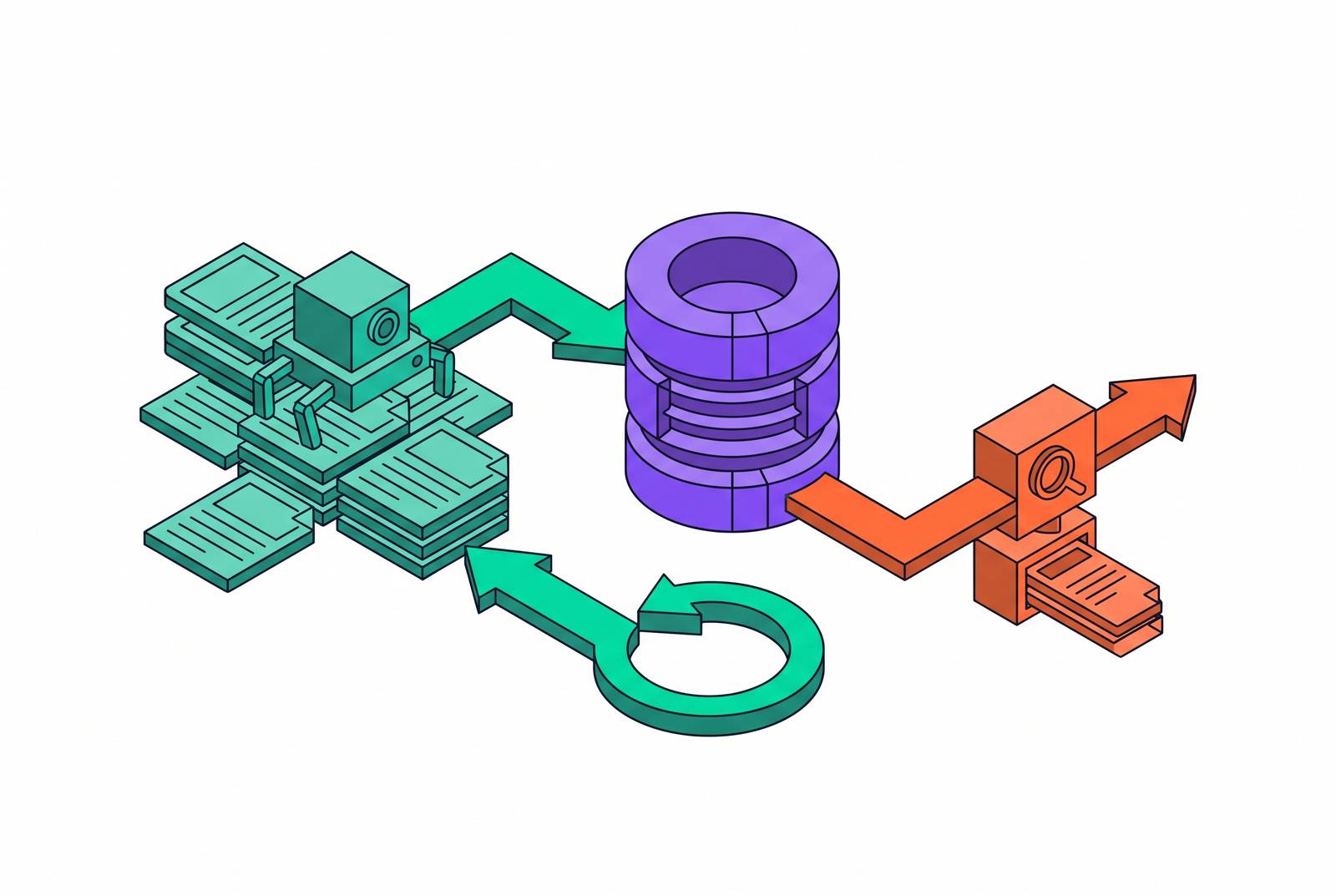
RAG systems fail quietly. A pipeline can run its scheduled crawl, log a clean exit code, and still hand a user an answer that stopped being true three weeks ago. This piece is about the difference: index freshness isn't something a cron job guarantees, it's a design decision that has to run through every stage of the pipeline, from crawl frequency to chunk versioning.
Why RAG pipelines go stale even when crawls succeed
Most people frame LLM hallucination as a model problem. Wrong lens, mostly. A lot of what gets called hallucination is really a mismatch between the model's training cutoff and whatever the current state of the world happens to be. Retrieval-augmented generation exists specifically to patch that gap, but only if the retrieved content is actually current. If it isn't, the system isn't hallucinating anymore, it's confidently reporting stale facts as live ones. Arguably worse.
Industry data backs this up. Reports on production RAG deployments consistently name the same three failure points: keeping pace with data that changes constantly, retrieving accurate results across large data volumes, and a general lack of solid evaluation and monitoring once the system is live. None of those are model problems. They're pipeline problems.
And the stakes are climbing fast. Gartner projected that by the end of 2026, 40% of enterprise applications will include task-specific AI agents, up from under 5%. Agents don't just answer questions, they act on retrieved information. A stale index doesn't just produce a wrong sentence, it can trigger a wrong action. Freshness becomes a production requirement at scale rather than a nice-to-have, because the volume of automated queries demands it.
A completed crawl is not a fresh RAG corpus, as webscraper.io makes clear. A green checkmark on a scheduled task tells you the job ran. It tells you nothing about whether the right answer is sitting in your vector store, queryable, right now.
Defining "fresh" before writing any code
Before fixing a staleness problem, define what "fresh" actually means for the system in question. It's not a scheduler setting, and it's not a single timestamp field. Freshness spans discovery, collection, validation, versioning, indexing, and retrieval, and a pipeline that's fresh at one stage can still be stale by the time an answer reaches a user.
Four contracts make this operational instead of aspirational:
A source contract defines which pages are authoritative, which are permitted to crawl, and how volatile each one is expected to be, a discipline that production teams handling live web data have found necessary. A document contract defines identity: what fields are required, what timestamps get tracked, how versions and provenance are recorded. A publish contract defines what a candidate document has to prove before it's allowed to become the "current" version in the index. A freshness contract sets the actual numbers: the maximum acceptable delay between a source changing and the index reflecting it, plus how much exposure to outdated versions is tolerable in the meantime.
That last one forces a real conversation. Some sources can tolerate a day of lag. Others, like inventory or pricing pages, can't tolerate an hour.
Collapsing timestamps into a single updated_at field is a design error that raises an unsolvable debugging mystery later. Four separate timestamps do four separate jobs:
source_modified_time is the publisher's claim about when the content changed. retrieved_time is when the collector last pulled a valid version of that page. content_changed_time is when the normalized content hash actually shifted, which is often not the same moment as the source's claimed edit time. queryable_time is when that new version became available to retrieval, the point that actually matters to the end user.
Why keep all four? Because source_modified_at is not always reliable, publisher timestamps don't always correspond to meaningful content changes. Tracking observation age and ingestion lag separately, rather than relying on the publisher's timestamp alone, gives a more honest measure of how stale the corpus actually is.
Choosing the right collection architecture for each source type
Three architectures cover most of the design space, and each one comes with a trade-off that doesn't go away no matter how well it's implemented.
A periodically refreshed corpus works for controlled sources with predictable question patterns. Staleness here is bounded and knowable: it's the crawl cadence plus processing time, full stop. An event-assisted incremental corpus works for volatile sources that actually expose feeds, webhooks, or some other reliable change signal. The catch is that most public sources on the open web don't offer complete, trustworthy events, so this architecture works great until the source doesn't cooperate. Query-time live retrieval handles open-ended questions that need very recent information, at the cost of higher latency, higher cost per query, and a lot more variability depending on what's on the other end of that fetch.
Most systems that work well in production don't pick one. They run a hybrid: a cached index for stable content, governed by a freshness TTL, alongside live fetch for anything time-sensitive. The decision of which path a query takes should happen per query type.
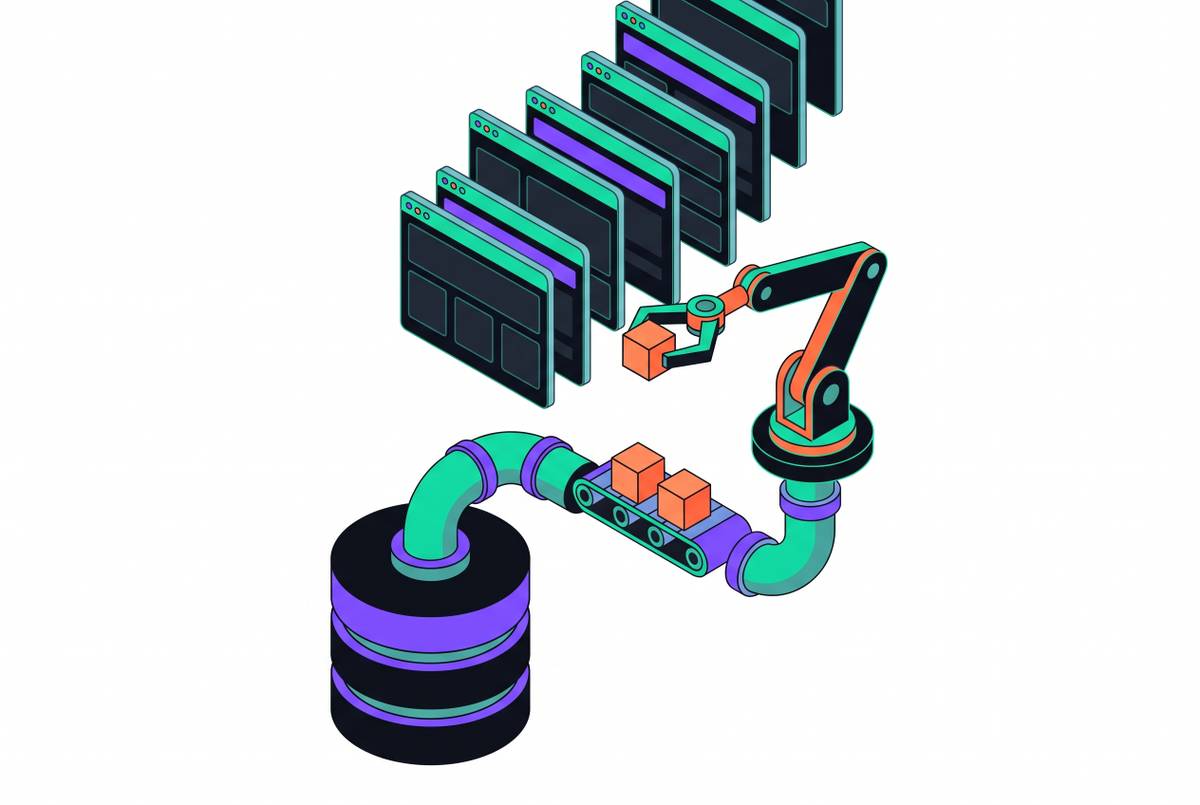
Selecting the right collection tool matters here too, and the scraper-versus-crawler distinction isn't pedantic. A scraper pulls one URL. A crawler discovers links and follows them across a site, which is what production-scale corpora spanning hundreds or thousands of pages actually require.
JavaScript rendering is non-negotiable for modern sites. Without a real browser environment doing the rendering, meaningful content on a lot of pages simply isn't there to collect. Raw-HTML collectors don't fail loudly here, they fail silently: the crawl reports success, the page comes back mostly empty, and nobody notices until a user gets a bad answer. That's the "successfully fetching an incomplete page" trap, and it's one of the sneakier ways a refresh pipeline goes stale without anyone touching the schedule.
Crawl infrastructure requirements for a refresh pipeline
The way developers think about scraping infrastructure has shifted. It used to mean assembling and babysitting a pile of components: proxy pools, header rotation, browser fingerprints, site-specific extraction logic. Now, API-based services increasingly bundle all of that, and the conversation has moved from "how do I manage this infrastructure" to "what data outcome do I actually need." That shift matters more once the job isn't a one-time scrape but a recurring refresh pipeline.
A refresh pipeline asks things of infrastructure that a single scrape never does.
Reliability has to hold over time. The same sources get hit repeatedly. A success rate that quietly degrades as target sites update their anti-bot defenses is, itself, a freshness risk, not just an operations headache. Geo accuracy matters for anything with region-specific content: prices, local availability, country-specific pages that render differently depending on the requesting IP's location. The crawler has to actually originate from the right country to see what a real user in that country sees. Sticky sessions matter for anything requiring multi-step retrieval, like paginating through a source or following a chain of links where IP continuity between requests is required.
Then there's the economics. Per-request APIs and flat monthly plans are built around one-time jobs, and they punish exactly the kind of repeated, bursty traffic a refresh pipeline generates. Per-GB pricing that doesn't expire month to month rewards the recurring re-crawl pattern instead of penalizing it.
Output format is its own requirement. LLM-ready crawl output means clean Markdown or structured JSON, not raw HTML dumped into a database. One crawling tool's distinction between a "fit" markdown output and a raw markdown output is a good illustration: the fit version runs a content filter, something like a pruning-based filter or another scoring-based filter, that scores text and link density to strip out low-value noise. That often means navigation bars, footers, sidebars get cut, though the filter is working off density scoring rather than targeting specific HTML tags. What's left is closer to the actual semantic content a retrieval system should be embedding.
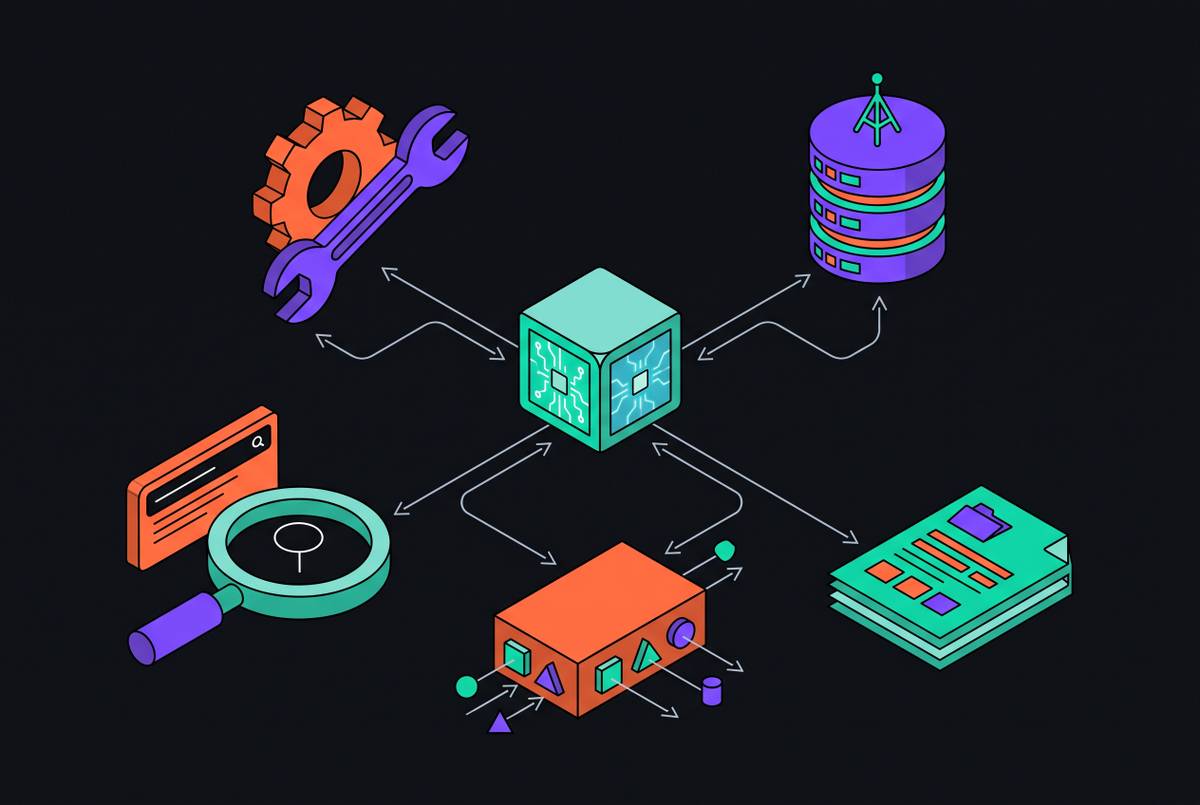
MCP server support is an emerging piece worth watching. It lets an AI agent scrape a fresh page dynamically at query time, without a developer having to write custom integration code first. That capability lines up directly with the agent-driven trigger pattern covered further down.
A survey of crawling and scraping tools for RAG refresh pipelines
Judge each of these against the requirements laid out above: JavaScript rendering, output format, support for change detection, whether the tool scrapes single pages or crawls entire sites, and how it integrates into a pipeline.
Crawl4AI is an open-source Python crawler built specifically for feeding LLM data pipelines. It uses Playwright under the hood for JS rendering, and it produces clean Markdown or structured JSON as output, with that fit-versus-raw Markdown distinction built in to keep token counts down.
Scrapfly offers a Crawler API aimed at site-wide RAG ingestion, handling the queuing, retries, and throttling that a large crawl needs, along with result pipelines. It's suited to jobs like competitor research or content monitoring running at scale.
CrawlForge connects an AI agent to a set of discoverable scraping tools (the vendor currently advertises 30) through a single MCP connection, with token-efficient Markdown output and credit pricing charged per call.
Three different shapes of tool, three different points in the pipeline where they fit best. None of them solves the whole problem alone, the pipeline design does that.
Change detection as the gate between crawl and re-embedding
Crawling a page again is cheap. Re-embedding it is not. That asymmetry is the whole argument for change detection sitting between the two steps as a gate, not an afterthought.
The core pattern, drawn from production LlamaIndex pipelines, is straightforward: compute a content hash for each crawled page, compare it to the hash stored from last time, and if they match, skip the page. Only pages with a changed hash get deleted from the docstore and re-inserted with new embeddings. Everything else is left alone.
The economics explain why this isn't optional at any real scale. Re-embedding every page on every crawl means embedding compute and vector store writes scale with the size of the corpus, not with how much of it actually changed. A large corpus where only a small fraction of pages update per week shouldn't cost the same to refresh as one where all of it changes. Skipping unchanged content is what keeps the cost curve tied to the right variable.
Hash the normalized content, not the raw HTML, since one detail makes or breaks this pattern. Page furniture, navigation menus, ad slots, footer text, changes constantly while the actual document content stays the same. Hash the raw HTML and the system will flag false positives on nearly every crawl, triggering re-embedding for pages that haven't meaningfully changed. Strip the boilerplate first and hash what's left; the hash then only moves when real content moves.
Webclaw's /v1/diff endpoint tracks content changes between snapshots at the API level, serving teams that would rather not build a content-comparison layer themselves.
Three trigger strategies
Cron-based re-crawl is the default, and it works fine for sources without webhook support and reasonably predictable change rates. The pattern: crawl on a schedule matched to the source's freshness contract, hash the new content, compare against the stored hash, update only what changed. Simple, dependable, bounded.
Webhook-triggered ingestion is faster when it's available. A CMS or a docs platform that fires a webhook on content change lets the pipeline re-ingest immediately, closing almost all of the lag between a publisher's edit and the index reflecting it. The limitation is coverage: most of the open web doesn't offer complete, trustworthy change events, so this strategy tends to work well internally and fall apart the moment external sources enter the picture.
Agent-driven, on-demand crawling flips the model. Instead of pre-crawling and hoping the right page is already indexed, the agent uses a crawler's MCP server to fetch a fresh page at query time. That's the right call for open-ended questions where the relevant page genuinely isn't known ahead of time. The cost is added latency and added spend on every single query that triggers a live fetch.
Streaming, event-driven re-indexing is a fourth pattern, even though it doesn't fit neatly into the trigger-based framing above. Streaming databases with native change data capture connectors and built-in embedding functions can turn re-indexing into a continuous process instead of a scheduled one. Embeddings stay current within seconds of a source document changing, cost tracks the rate of change rather than the size of the corpus, and the scheduling layer disappears from the architecture. It's the most demanding pattern to set up, and also the one that removes nearly all staleness as a variable.
None of these four is universally correct. The freshness contract for a given source, defined earlier, should dictate which one gets used, and a mature pipeline usually runs more than one at once.
Chunk versioning and selective re-embedding as a first-class index concern
Old and new versions of the same chunk can both sit in the index, both retrievable, with nothing in the metadata to say one of them is stale. Retrieval returns whatever scores highest on similarity rather than preferring the newer chunk. It just returns whatever scores highest on similarity, and a superseded version scores just as well as the current one, because embeddings don't carry a "this is outdated" signal on their own.
Fixing this requires document identity discipline built into the chunk metadata from the start: source URL, retrieval timestamp, content hash, and some notion of version lineage, all carried alongside the vector itself. Without that provenance, there's no way to answer a basic operational question after the fact, which is whether a given chunk in the index is the current version of that content or a leftover from three crawls ago.
Selective re-embedding, the pattern already discussed for change detection, only works cleanly if chunk versioning is treated as part of the index schema and not bolted on after the fact. Get the identity and versioning right at ingestion, and the rest of the refresh pipeline (hashing, triggering, re-embedding) has something solid to hang off of. If it's skipped, every other piece of the freshness architecture works against an index that can't tell old from new.
Sources
- Build a RAG pipeline with live web data (4 steps) | webclaw
- Scrape-to-RAG with LlamaIndex and fastCRW (2026): A Production Ingestion Pipeline
- 10 Best Web Crawlers for LLM and RAG Pipelines in 2026
- Building a RAG Pipeline on Live Web Data
- RAG Knowledge Base Freshness: The Staleness Problem Teams Solve Last - TianPan.co
- RAG Architecture in 2026: How to Keep Retrieval Actually Fresh | by Asher | Real-Time Data Evolution | Medium
- medium.com
- fastcrw.com