Failure Mode Taxonomy for Automated Web Scraping Pipelines at Ingestion Scale
Identify where scraping pipelines fail before choosing a fix.
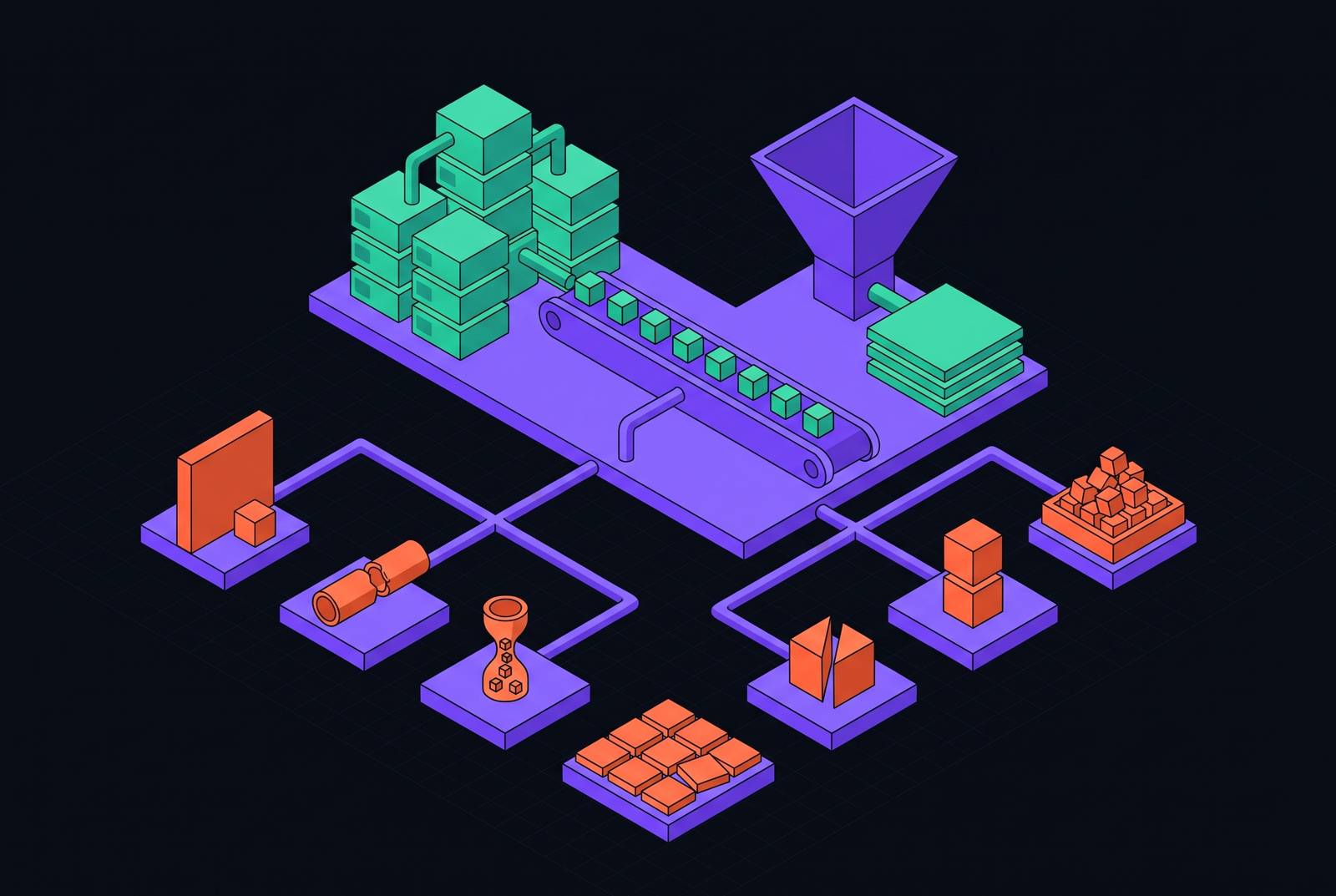
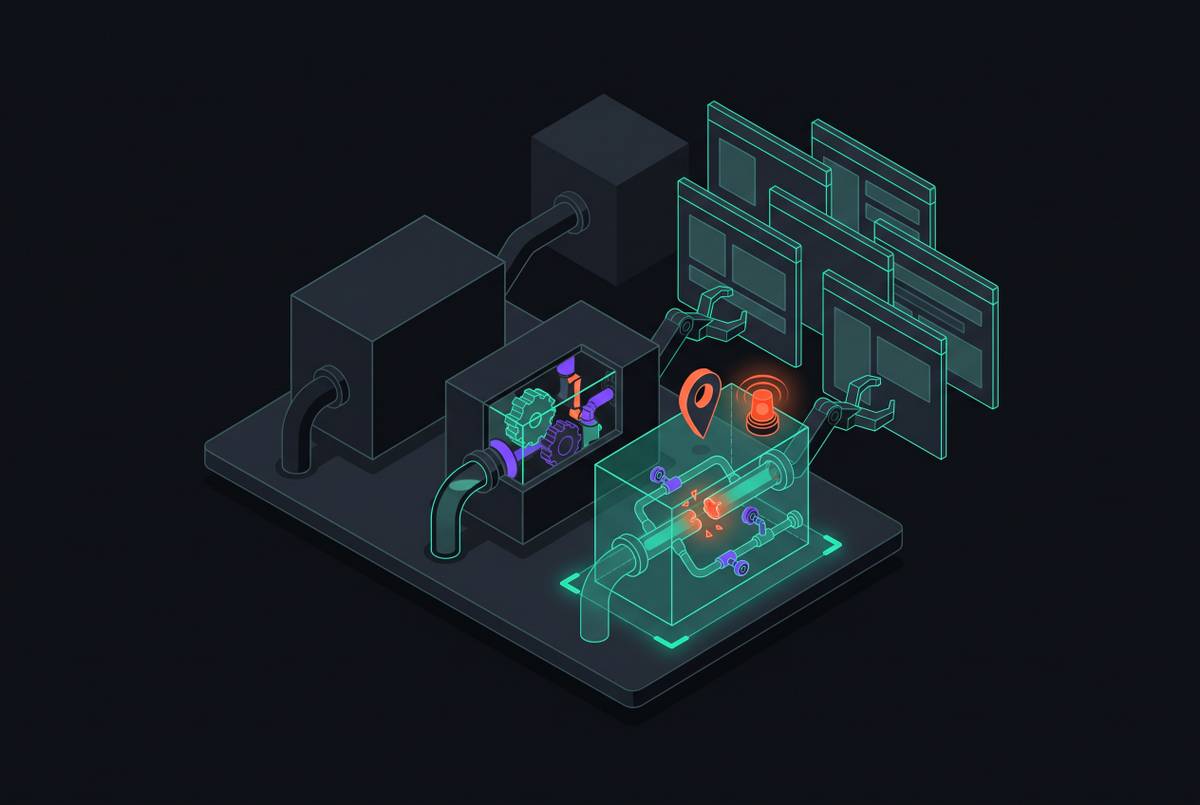
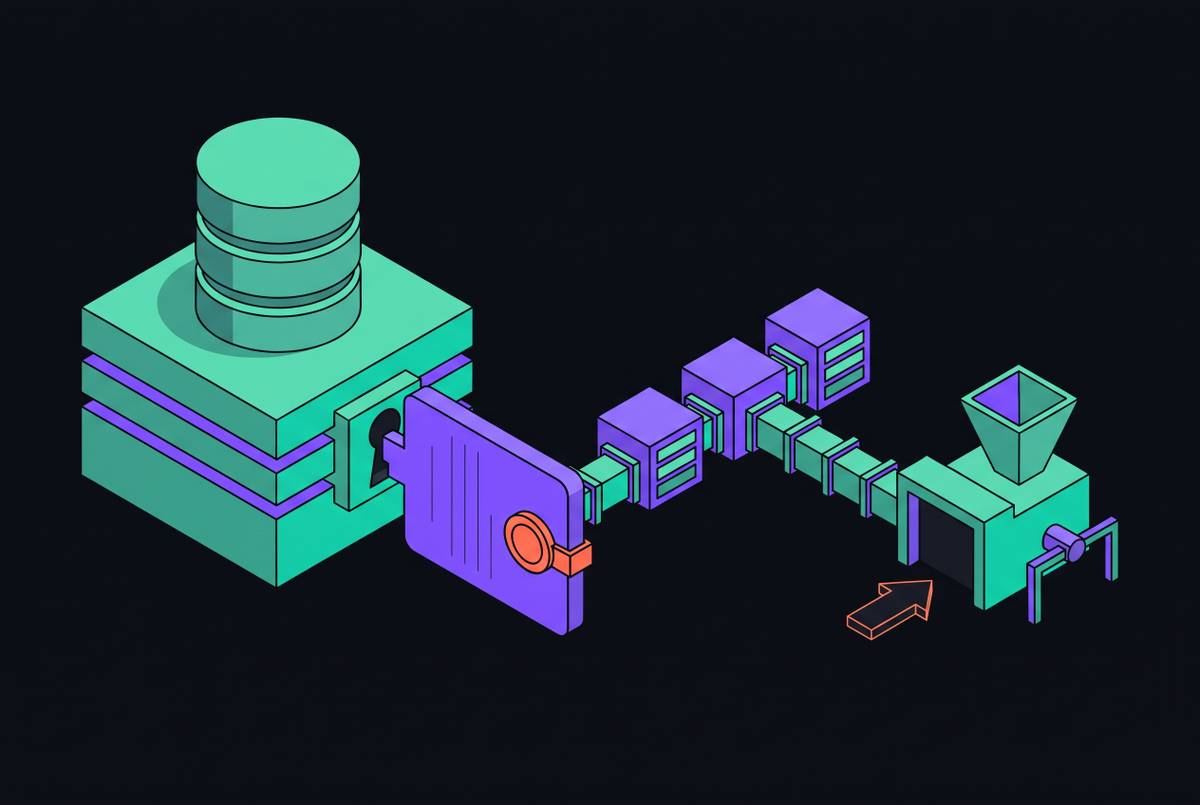
An automated web scraping pipeline retrieves pages, extracts structured data, and keeps a stored dataset current. At ingestion scale, reliability depends on locating failures across five layers, which are fetch, extraction and schema, freshness, change detection, and agentic security. Naming the failed layer comes before choosing a fix, because a successful job can still deliver broken data.
Why automated scraping pipelines fail differently at ingestion scale than at single-page scale
“Scrape once” and “ingest continuously” are different jobs. A one-off scraper answers what is on a page now. A continuous pipeline must keep a dataset fresh and structured so a model can use current information. Most scraping tools were built for the first job, leaving the work of scheduling, cleaning, and maintaining ingestion to the team. When the load stays high, a scraper tied to one HTML layout and one request path proves to be a prototype rather than something that can serve as production infrastructure.
The difference also changes how failure becomes visible. A failed manual pull is right in front of the person who ran it, while a continuous job can report success long after its output becomes unreliable. Even successful retrieval leaves another problem, because raw HTML contains navigation, ads, tracking scripts, and layout tags that consume tokens without supplying useful content. Refreshing thousands of pages daily and reshaping them into model-ready data turns that cleanup into an infrastructure job.
Why naming the failure class matters before reaching for a fix
“Scraper down” is too vague to guide a repair. Rotating proxies, rewriting a schema, re-chunking an index, and adding a change alert address different causes. Without locating the failure, an engineer can spend time fixing a layer that is working correctly. Worse, a result that looks right can hide the failure altogether, so a model can reason confidently over broken input and send the answer to users.
A successful tool call is not proof of successful ingestion. The Scrapfly agent guide describes agents treating blocked retrieval as a successful call, extracting what they can from a bot-detection page, and passing it downstream without the logs flagging the problem. The diagnostic frame therefore needs five layers, namely fetch, extraction and schema, RAG and freshness, change detection and monitoring, and agentic security.
Fetch-layer failures: the class that corrupts data before any extraction logic runs
A false-200 response is the least visible fetch failure. A site returns HTTP 200, but its body says “Access Denied” rather than containing the requested article or product information. Standard success-code monitoring sees no problem, so the pipeline ingests the block page and the model extracts whatever it can. A 429 or 403 warns of a problem, but this status gives no warning. This makes false-200 corruption especially dangerous at the layer where most agent failures on live sites begin.
Geographic variation can be harder to recognize than an outright block because the site returns content localized to a different country. A pipeline fetching from a datacenter IP in one country may expect prices localized to another. The site silently supplies different numbers, and the model accepts them as the intended data.
JavaScript rendering gaps create a different kind of false success. A raw HTTP request can return a sparse shell with loader references, leaving out the content that appears in a browser. The agent then treats the data as missing and replans in response to a retrieval failure. A/B testing and client-side rendering can also produce different HTML on consecutive requests to the same URL. That variation undermines an extraction model built around one stable response.
Fingerprint detection explains why changing an IP may not fix blocked retrieval. Sites can detect TLS fingerprints such as JA3/JA4, timing anomalies, missing mouse movements, and inconsistent JavaScript execution. Chromium through Playwright, Puppeteer, or Selenium can expose consistent viewport dimensions, deterministic SwiftShader canvas fingerprints, and no cookie history. CAPTCHA challenges are easier to spot, but even paid solvers leave some unsolved, and dealing with those takes work when the volume is high.
Extraction and schema failures: when the data arrives but the structure it lands in is wrong
Selectors have a half-life as page layouts change. A pipeline can keep using an old layout, report success, and write rows that are empty or have mismatched data. The page arrived, but the extractor read the wrong place. Unlike a clear retrieval error, this failure can remain hidden until a downstream system produces a wrong result. Surviving fetch is therefore only the start of making data usable.
Semantic ambiguity is more insidious because the extracted value may genuinely appear on the page. A product’s “price” might mean list, sale, member, subscription, or variant price. A model can consistently choose the wrong one across thousands of pages, creating a clean-looking dataset with a systematic error. Other domains introduce their own distinctions, including nightly versus monthly property prices, fees included or excluded, and salary ranges versus hourly pay. Format checks cannot tell which meaning was meant.
JSON schemas began as contracts between developers and static systems. Ambiguous field descriptions and unclear entity boundaries can trigger hallucinations even when the schema is syntactically valid. Output with the right structure can pass downstream checks even when its facts are wrong.
Constrained decoding can make that false confidence worse. It guarantees syntax, so a grammar can allow a well-formed value in a field that should have remained empty. The result shifts from visibly corrupt data to plausibly wrong data. Because the data passes schema checks, downstream systems have a reason to trust it more than the evidence warrants. A mitigation aimed at format has made the factual error harder to catch.
RAG and freshness failures: when the index is stale and the pipeline does not know it
Even a correctly extracted page becomes a freshness failure when its next fetch does not match the source’s rate of change. The pipeline worked at ingestion time, but the world moved. RAG, or retrieval-augmented generation, can keep retrieving that old content without noticing that the source has changed. Week-old government policy data can produce wrong answers, while stale job listings misrepresent the available market. For these sources, freshness operates in days, making months between updates too long.
Coverage gaps are the bluntest version of this problem. Retrieval cannot find a page that was never crawled, including one published after the last collection run. Without that page, an agent may hallucinate or fall back on outdated training data. Existing pages create a related failure when corrections, retractions, or new policy language leave old embeddings pointing at superseded text. The model can still cite the source while treating what it used to say as what it says now.
Source documents can drift over a year while retrieval thresholds accept noisier candidates, reducing answer quality without any code change. Chunking can also hide a loss when fixed-size boundaries break a unit of meaning into separate pieces. The chunk is created, the embedding generated, and the vector store updated, so standard metrics show success. Yet the ingestion step has made the complete meaning unretrievable, which a later retrieval step cannot reliably repair.
Change-detection and monitoring failures: how a working pipeline degrades into an unreliable one
Production pipelines often keep running as their output degrades. A page moves a sidebar into its main body or merges navigation into its content area, and an extractor built for the former layout starts reading the wrong region. Embeddings still generate and the vector store still updates. Without a signal tied to the source change, normal job activity conceals the loss of quality. Fetch, extraction, and freshness errors can then accumulate together.
Content substitution exposes the same blind spot over time. A source publishes a correction, retraction, or new policy language, but the pipeline retains an old cached version. Detecting that change requires looking at the content the pipeline actually needs. Raw HTML diffing on heavily JavaScript-rendered pages can miss substantive changes while flagging meaningless script churn. When noisy alerts teach a team to ignore notifications, the monitoring system loses its usefulness before the underlying data failure is addressed.
Alert delivery can break automation at the final step. A webhook with structured JSON can be read and acted on by a downstream system, while an email saying that something changed sends the work to a human inbox. Across enterprise data pipelines, unmonitored source changes leave a majority needing manual correction. For AI systems, this is worse than a hard crash because the model turns broken inputs into confident output.
Agentic and security failures: the class that turns a scraping bug into a multi-system attack
In an agentic pipeline, the web becomes an attack surface as well as a data source. The qualitative shift is from engineering failure to misplaced trust. A malicious page can hijack planning, trigger privileged tool calls, leave malicious instructions in memory, and spread those instructions through systems that are connected to it. Better fetching, cleaner schemas, and fresher indexes do not address the decision to treat untrusted page content as instructions.
Indirect prompt injection is no longer only a proof of concept. Adversaries are placing hidden instructions on the open web to manipulate browsing agents, coding assistants, and enterprise copilots. The exposure extends beyond the agent that first reads the page, because downstream agents may consume its summaries, extracted data, or delegated subtasks. One malicious input can therefore propagate through a workflow. The OWASP Top 10 for Agentic Applications 2026 places Agent Goal Hijack (ASI01), which includes prompt injection, first, while Human-Agent Trust Exploitation ranks 9th.
Without a stop condition, an agent can retry a CAPTCHA, replan after every 403, or follow a malformed paginator until its token budget is empty. These unproductive trial-and-error loops amplify cost. The same guide separately describes an agent looping on an accept-cookies banner because clicking it was never part of the plan, under “Captcha and consent loops.” That distinction prevents a planning omission from being misdiagnosed as an anti-bot problem.
Using the taxonomy to locate a failure, not just describe it
For empty rows or plausible but wrong values without logged errors, the diagnostic starting point is the fetched content, including false-200 bodies, missing JavaScript content, and geographic variants. If the right page arrived but the same semantic error appears in the extracted data across many pages, the next places to check are selectors, field meanings, and schema constraints. Those symptoms overlap, so the output alone is not a verdict. The distinction is whether the wrong input arrived or the right input was interpreted incorrectly.
When a healthy index returns old answers, coverage and freshness need a check, while missing units of meaning call for a look at chunking. When output drifts over weeks without a code change, the likely causes are changes to the source and monitoring that fails to catch them. Unexpected agent behavior or unexplained cost overruns instead raises questions about prompt injection and uncontrolled loops. A malicious fetched page can surface as a downstream hallucination that looks, at first, like an ordinary model error.
For teams building a reliable workflow, the next decision is which responsibilities belong in-house and which belong in infrastructure. Fetch reliability, clean markdown or JSON, scheduled crawls, and structured extraction against a developer-defined schema are concrete criteria for that choice. A single API offering those functions can reduce the undifferentiated work that delays shipping. Those capabilities are not, by themselves, a guarantee against semantic errors or attacks on agent trust. Naming the failure class makes that boundary explicit, so a team can choose infrastructure for the work it actually handles rather than for the promise of a scraper that never breaks.