Web Data API Compatibility Across LangChain AutoGPT and Emerging Agent Frameworks
The fetch layer, not the framework, determines whether web agents succeed against live sites.
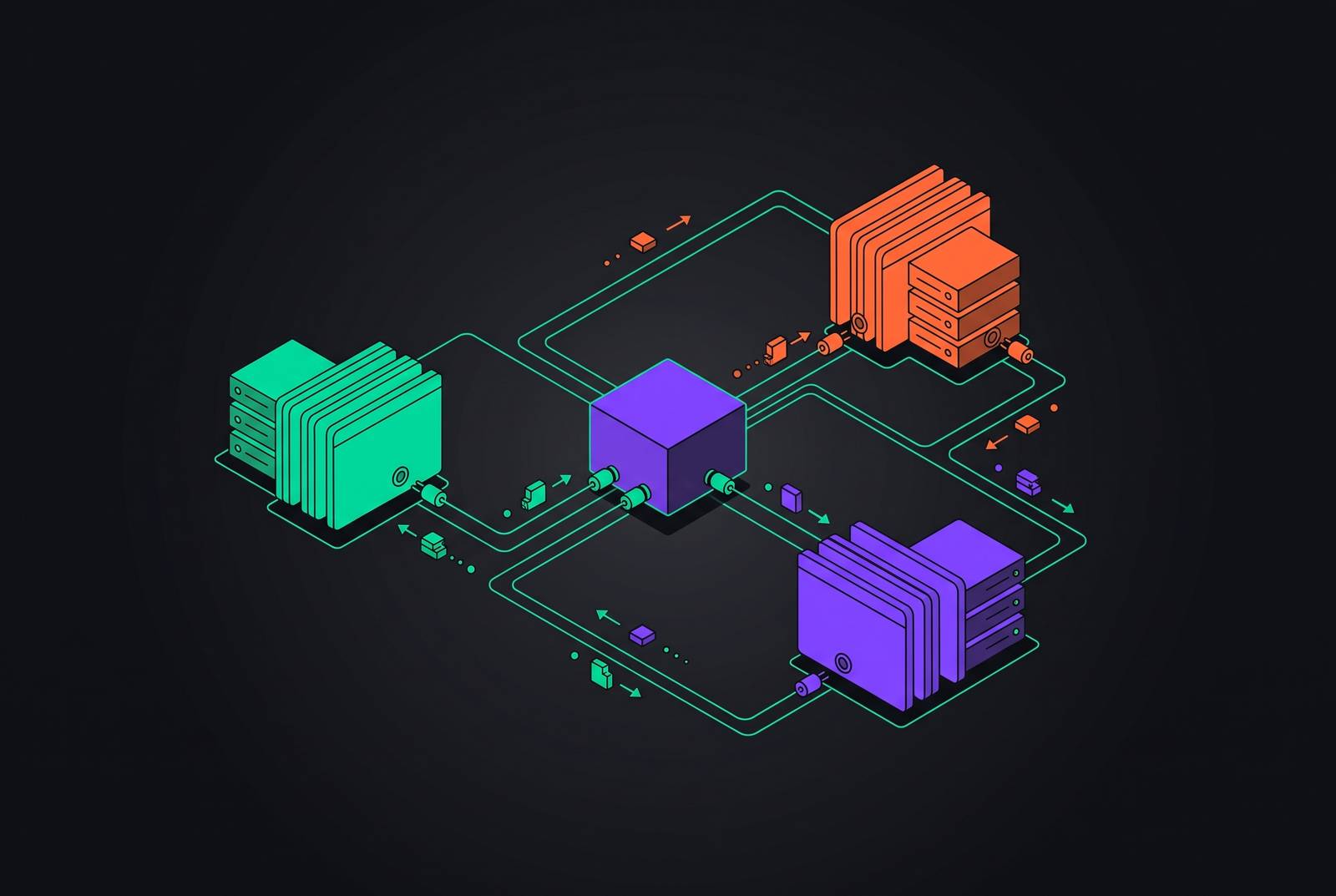
Web data API compatibility across LangChain, AutoGPT, and emerging agent frameworks is mostly a fetch-layer problem. The framework runs the agent’s loop, but the web data API supplies that loop with useful content, a readable error, or a bot-detection page. A clean integration needs both a tool interface that fits the framework and a fetch layer that can handle the live web.
Why the fetch layer, not the framework, determines whether an agent succeeds on a live site
A LangGraph agent calls a fetch tool and gets a Cloudflare interstitial. It treats the challenge page as content and tries to extract product data from a CAPTCHA screen. The framework has done its job correctly. It called the tool, received a response, and passed that response into the next step. The fetch layer failed to provide the page the agent needed.
That distinction separates orchestration from access to the web. The agent loop moves through observe, plan, and act, but observation is where most agents on live sites break. A planner cannot extract products from a page that contains only a bot challenge. Because the fetch result becomes the input to later decisions, a broken fetch can make planning, extraction, and reporting all look broken too.
How LangChain, AutoGPT, and emerging frameworks each expose the tool-calling surface
The framework still determines where the fetch tool plugs in. LangChain provides prebuilt tool wrappers and an agent executor, while LangGraph represents the workflow as a stateful graph with explicit nodes, edges, retries, and branches. The fetch tool becomes a node in that graph. For developers choosing between a simple loop and a graph, LangGraph earns its complexity when the task involves searching, fetching, deciding, and fetching again. Its structure makes those separate steps explicit.
Document loaders offer another entry point into that workflow. Scrapfly provides ScrapflyLoader for LangChain and ScrapflyReader for LlamaIndex, exposing scraping endpoints through document-loading interfaces. Developers then wrap those loaders as named tools. The loader connects the framework to the content source, while the named tool gives the agent an operation it can request.
AutoGPT exposes a different surface for web access. It supports multiple LLM backends, an agent marketplace, and a block-based system for web browsing, file operations, and API integrations. Web data tools plug in as plugins. Recursive self-prompting can consume high token volumes when the agent keeps replanning around an empty page while the underlying failure remains unreported.
CrewAI, AutoGen, and LlamaIndex occupy the same orchestration category, though their interfaces differ. CrewAI supports sequential and parallel task execution and can reuse LangChain tools, typically through a thin wrapper such as a BaseTool subclass or Tool.from_langchain(). Reuse does not mean the interfaces are identical. For developers starting out, raw tool-calling with an SDK offers the most control in the fewest lines. The developer defines a scrape tool, lets the model request it, runs the fetch, and feeds the result back, keeping every step visible.
The three integration paths a web data API can take into an agent, and what each costs the developer
With a direct REST integration, the developer has to write the wrapper. Each endpoint needs a tool definition, parameter descriptions, JSON parsing, and error handling that produces something the agent can understand. The model never touches the network directly. The surrounding loop runs the request and returns its result, so REST compatibility depends on code outside the model. That code is provider-specific and can break when the API changes.
A framework-native SDK package removes much of the wrapper-writing work for its target framework. A dedicated langchain-[provider] package, for example, makes it easier for developers to use LangChain. The saving stops at that framework’s boundary. The package needs more work to become a CrewAI tool or an AutoGen skill, so developers may still have to adapt it when they move between runtimes. This path trades some integration work for dependence on a particular framework interface.
With an MCP server, the shared interface is part of the protocol. An MCP-native runtime can discover the server’s available tools and typed schemas without custom glue code for every endpoint. Those schemas spell out the parameters the model can reason over. By contrast, loosely typed string-in, string-out interfaces leave it guessing argument names and interpreting freeform responses. That ambiguity creates room for hallucinated arguments and silent failures, regardless of which framework runs the loop.
Developer effort is only one part of the cost. An autonomous run can call a fetch tool dozens of times, so pricing must also make sense at loop scale. With per-byte or per-proxy-gigabyte billing, it is hard to plan a budget ahead of time because a run’s cost depends on more than how many calls it makes. Developers need to assess the invocation interface and the billing model on their own.
Why MCP has become the dominant integration primitive for agent-native web data APIs
MCP cuts the upkeep that comes with supporting more frameworks. A plain REST API needs a LangChain wrapper, an AutoGPT plugin definition, and a separate CrewAI tool registration to fit those surfaces. Each integration describes access to the same fetcher. An MCP server instead exposes shared typed tool schemas to Claude Desktop, Cursor, LangGraph, or another MCP-native runtime.
That shift also affects how agents respond to failures. A 403 or an empty selector is useful only if the agent receives a signal it can interpret and act on. Structured MCP errors can supply that signal. An opaque REST failure can stall the loop, although a developer can write a REST wrapper that translates errors into usable responses.
MCP is therefore the direction of the integration surface, while working REST pipelines remain viable. Some production stacks will remain REST-first for years. Teams with established pipelines need a migration path that preserves their existing work. An API with both REST and an MCP server lets them move tools one at a time as the agent loop matures. The fetch layer can stay the same while the way the agent invokes it changes.
What actually breaks when agents hit the live web, and why a managed fetch API absorbs those failures better than DIY
Anti-bot blocking can return a success status while substituting a detection page for the real page. The model then receives the wrong evidence. If that response passes through as ordinary content, the agent may confidently report extraction results it has made up. The fetch layer needs to tell useful content from a blocked response before either reaches the reasoning loop.
Even without a block, the fetched HTML may be different from what a browser shows. With JavaScript-rendered content, selectors seen in DevTools may be missing from the raw response, which can lead the agent to think the data is missing. When the model guesses a CSS path, changes to the site’s DOM can make that guess stale, and the agent may report zero results with high confidence. Neither failure is fixed by asking the model to reason harder over the same input.
Runs with more than one step also have to deal with session state. An agent may authenticate on step one, then lose access by step five because its cookie has expired or its proxy IP has shifted. The site sees a new visitor instead. Reauthentication can trigger a fraud check and stop the run. If the agent responds to access failures with repeated trial and error, token spend grows with every failed attempt until it gives up or a guard stops it.
A datacenter IP in one region can receive localized prices or content when the agent expects another region, and the model may never detect the mismatch. Clean-looking output can still be the wrong output. This makes region and language part of both fetch correctness and presentation. More planning cannot reveal a discrepancy that the fetched evidence does not expose.
A managed fetch API takes care of anti-bot handling, JavaScript rendering, proxy rotation, and session management below the agent. Its role is to return clean output or a structured error when it encounters a challenge screen. Those jobs belong below the reasoning loop. Sites protected by Cloudflare, DataDome, or Akamai require a real proxy network and anti-bot engine.
What the output format the API returns determines about how well the agent can reason
Successful access is only the first requirement for useful evidence. Raw HTML has navigation chrome, cookie banners, tracking scripts, and inline styles that use up tokens without helping the agent answer its question. The model pays to read that noise. Clean Markdown or structured JSON reduces token cost and improves extraction accuracy by narrowing the input to useful content. The fetch layer has to handle output format because it affects how the agent uses the content as well as how it looks.
Markdown works well when the agent needs readable content with its structure intact. Headings and hierarchy remain available, making the output directly chunkable for retrieval-augmented generation, or RAG, without extra post-processing. Structured pipelines need a tighter contract instead. Schema-driven extraction accepts a developer-defined JSON Schema or a plain-English prompt and returns validated JSON, sparing the agent the work of parsing a freeform string. OpenAI’s Structured Outputs applies the same principle at the model layer, using JSON Schema to make responses match supplied specifications.
Scrapfly supports CSS/XPath templates for stable schemas, LLM prompts for fuzzy content-aware extraction, and auto models for common page types such as products, reviews, and listings. Those methods are not interchangeable formatting choices. Templates fit stable structures, while prompts address extraction that depends on interpreting the content. The required output should guide the extraction method rather than leave the agent to repair an unsuitable response.
For RAG, the fetch layer also limits how current the index can be. A static index can only be as fresh as its last crawl. Live-web RAG fetches and cleans pages at query time instead. That approach depends on output clean enough to embed directly, without rebuilding a parsing pipeline around each response. Access, format, and freshness meet at the same boundary between the web and the model.
How to evaluate a web data API against the tool-calling requirements of each framework
For developers evaluating an API, the first question is tool discovery. Can the agent enumerate available operations and read typed parameter schemas at runtime, or must a human maintain a wrapper for every endpoint? That distinction exposes the ongoing integration burden. Second, developers need to check the output format to see if the API returns clean Markdown or structured JSON by default. Raw HTML leaves parsing work between the fetch and the agent’s reasoning.
Does a 403, empty selector, or bot wall become a structured error the agent can use, or an opaque failure that stalls the loop? Error handling deserves a direct test. Fourth, developers need to check surface coverage, including an MCP server for runtime discovery, a native SDK for LangChain or LlamaIndex, and REST for raw tool-calling or AutoGPT plugins. One supported interface does not establish a clean fit across all those uses.
Fifth, developers need to check if they can plan for costs inside an autonomous loop. Flat per-call pricing is easier to budget than charges that vary by rendering mode, proxy type, or bytes transferred. Integration speed belongs in the decision too. Getting from zero to working API calls should take minutes, and one well-designed API can replace a fragmented stack of scrapers, crawlers, and data vendors. That consolidation is useful when it removes work.
A custom stack may scrape pages, render JavaScript, compute diffs, store versions, and retry failures successfully until a site changes its layout, adds bot defenses, or moves to client-side rendering. Each change requires developer time to repair. The API decision is ultimately about who owns reliable access and usable evidence while the agent runs.