Purpose-Built vs Repurposed Crawler APIs and What the Architectural Seams Tell AI Engineers
Architectural seams reveal which APIs leave integration work for your team.
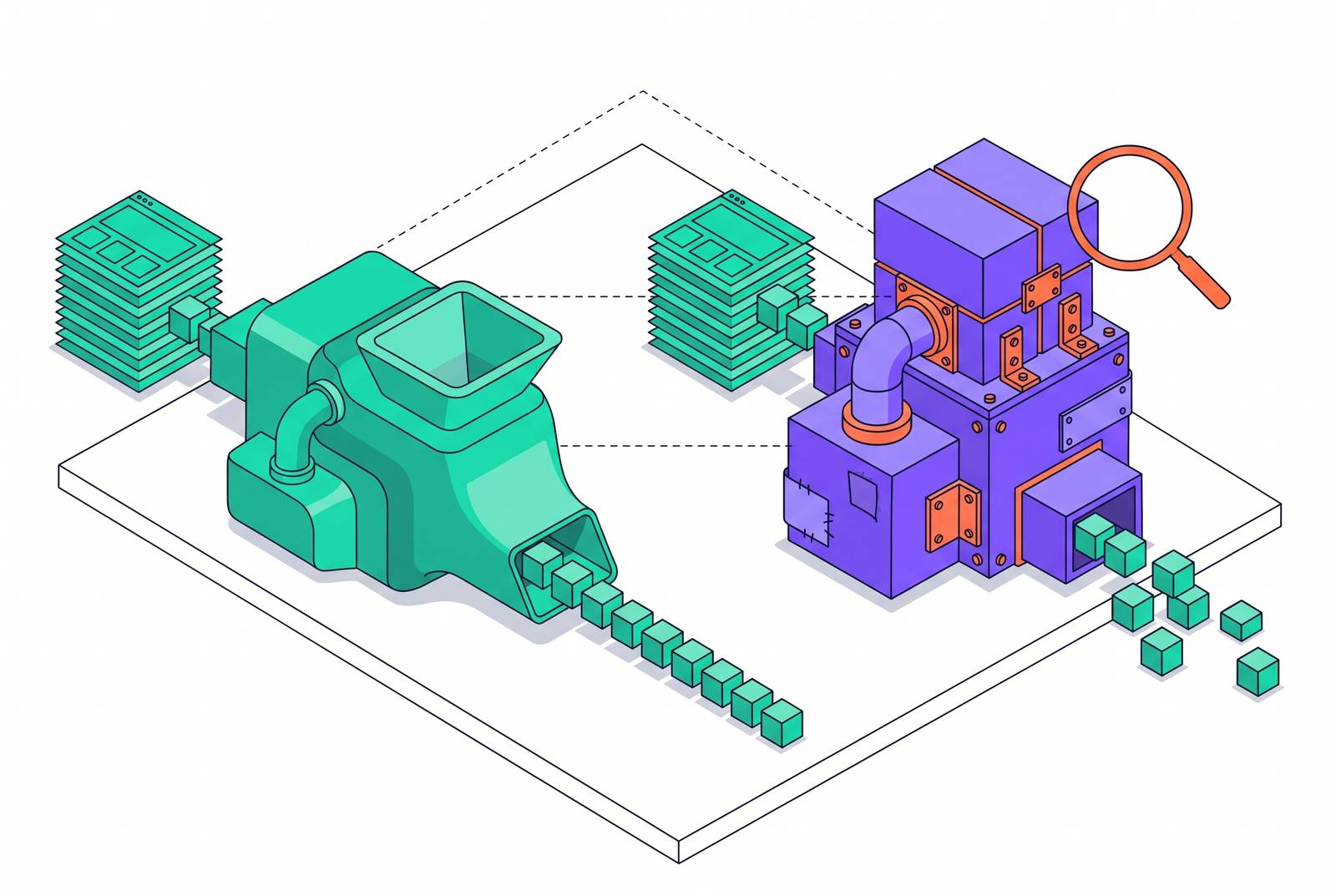
A web scraping API for AI agents and LLM pipelines should return clean Markdown or schema-validated JSON, support recurring data collection, and connect without a custom adapter layer. Purpose-built versus repurposed is an architectural distinction, visible in output format, transformation burden, pipeline continuity, and integration surface. Those four seams show how much work an API leaves for engineers, whatever its marketing says.
Why the purpose-built versus repurposed distinction is an architectural question, not a marketing one
A successful page fetch is not a successful AI integration. Between fetching a page and sending useful content to a model, someone must clean the output, extract fields, connect the tools, and keep the data current. The real comparison is who owns that work. An API can solve access to a website while leaving most of the pipeline unfinished.
A scraper built to retrieve pages on demand does not become a continuous data service simply because it adds an AI endpoint. Missing scheduling and layout-sensitive extraction are signs that the scraper was built for another job. An engineer who can read those seams can evaluate any crawler API in a conversation, rather than discovering its limits after a week of integration work.
Which scraping APIs return LLM-ready content rather than raw HTML?
The first distinction is visible in the response body. Raw HTML has navigation menus, ad markup, tracking scripts, and layout tags that get in the way of the content a model needs. Sending that response straight to a model wastes tokens or confuses the model, so each useful output costs more. Check the output format before spending time comparing features.
“LLM-ready” needs a mechanical definition. For text ingestion, it means clean Markdown without navigation boilerplate. For structured extraction, it means typed JSON that validates against a developer-defined schema. The useful distinction is whether the response already has the structure the pipeline expects.
AI-native crawlers can provide Markdown, structured JSON schemas, screenshots, and search, while HTML-first scrapers leave content preparation to the team. But a feature list alone cannot show how much work is left to get the content ready. A documented Markdown option and clean default output are different signals. The practical test is a page that relies heavily on client-side scripting with no configuration. What comes back reveals whether usable content is central to the API’s design or requires a separate extraction workflow.
An HTML response may be exactly what a team wants when it intends to control processing itself. But it is not equivalent to content ready for a model. The difference appears in the adapter layer between the response and its destination. The next engineering cost begins there.
Transformation burden and the hidden engineering cost output format creates
A raw-HTML response leaves the transformation work to the team using the API. The team must handle Markdown conversion, boilerplate stripping, and field extraction before the model can use the content. Keeping the code for those steps working as source pages change layout is a permanent maintenance obligation for the team.
Each component for conversion or extraction is another part of the pipeline the team owns and must keep working as layouts change. The API price does not capture that obligation. Comparing only the cost of fetching a page leaves out the work needed to turn each response into usable data.
An API that accepts a developer-defined JSON schema and returns validated typed output places extraction maintenance in the vendor’s layer. With prompt-based extraction, the team can describe the fields it needs without selectors. By contrast, CSS or XPath rules require maintenance when the markup they depend on shifts. An API either returns the requested structure or leaves parsing work downstream.
Control over output shape is not, by itself, a reason to accept that parsing problem. A developer-defined schema preserves control over the structure. Full data lineage is a different requirement. ML teams that pull processing in-house for IP-provenance audits may legitimately accept transformation work in exchange for control over the data’s lineage.
Pipeline continuity and why one-off pulls fail as a data pipeline
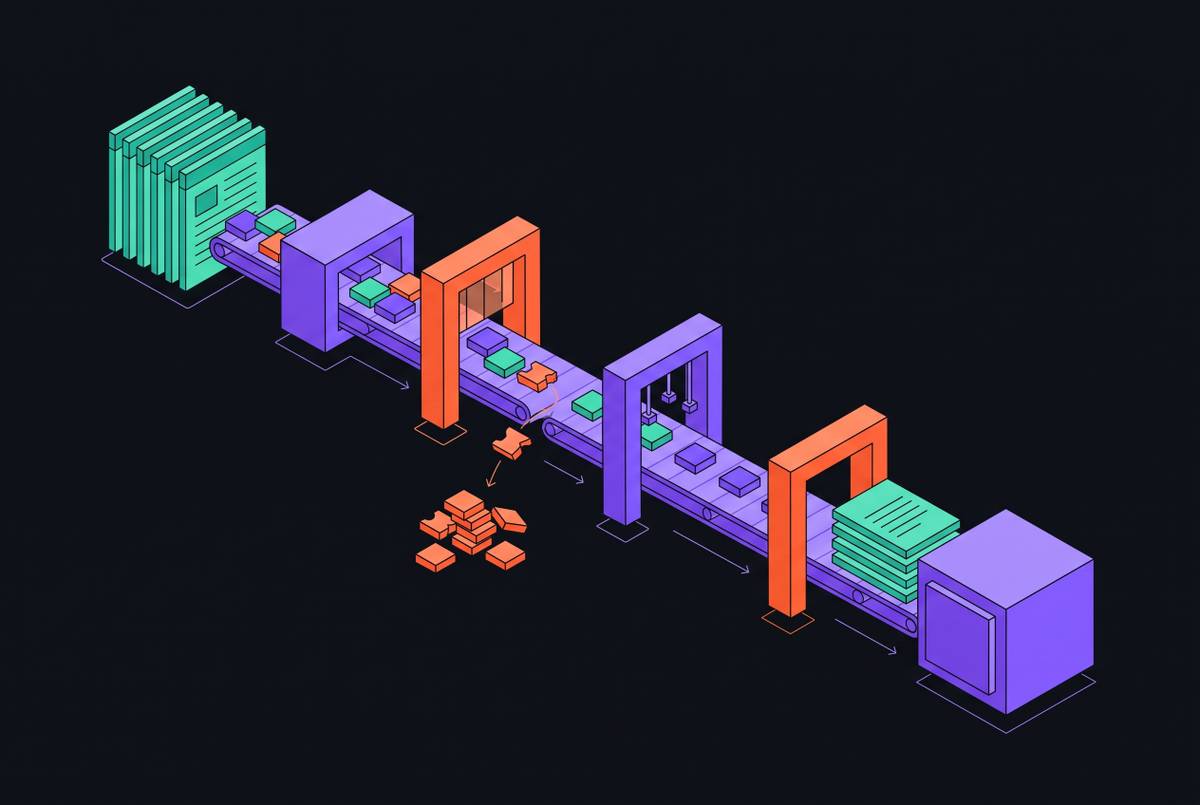
A one-off scraper answers what a page contains when called, while a continuous pipeline must keep a dataset current. Those are different jobs with different requirements. A clean response proves little about whether the API can sustain fresh inputs over time.
Embedding-based retrieval makes the limitation easy to see. It can retrieve only documents that have already been indexed, so prices, library versions, regulations, and security CVEs can outpace the indexing cadence. Better formatting cannot repair that gap. The relevant crawler capabilities are recurring scheduled crawls, sitemap-based change detection, per-topic TTL, and ideally event-driven invalidation. If the crawler lacks these, the team must build them around the extraction endpoint.
Continuity also needs more than repeated fetching. A live-web pipeline aims for current answers, claims traceable to URLs, fetch timestamps attached to chunks, and source grounding that reduces hallucination. Scheduling alone does not establish provenance or auditability. But even content with a traceable source can fall behind the live web if collection stops. The API’s design needs to support both refreshing the dataset and retaining the evidence needed to interpret it.
Change detection renders a page, compares it with the previous version, and reports a difference for a person to interpret. Structured monitoring watches named fields and returns their current values as rows. Those rows support trend charting, field-routed alerts, and historical queries. A page difference is an observation, whereas structured monitoring supplies data a pipeline can use directly.
Freshness has a cost in latency. A smaller amount of high-quality, current content can outperform a larger volume of mixed or stale content, but obtaining current content takes time. That trade-off belongs in the architecture rather than being hidden behind a claim of real-time access. The seam is whether the crawler exposes scheduling, triggers, and change detection, or merely returns a dataset whenever another system calls it.
Integration surface and what MCP support, SDK design, and setup time reveal about a tool’s intended user
Once the data can stay current, it must connect to the systems that use it. An official MCP server exposes tools directly to compatible agents, while a REST-only API leaves the team to supply the agent connection. That difference is more than convenience. It shows whether agent workflows have a supported entry point or depend on custom adapters maintained with the product.
SDK design and setup time expose the same distinction. A tool built for AI engineers should let them make a working API call in minutes, without going through a multi-stage job workflow to get output they can use. The shortest path in the documentation is revealing. If usable content comes only after separate configuration, execution, and retrieval steps, the engineer is looking at a different workflow from a direct content API. That workflow may be legitimate, but its integration cost belongs in the comparison.
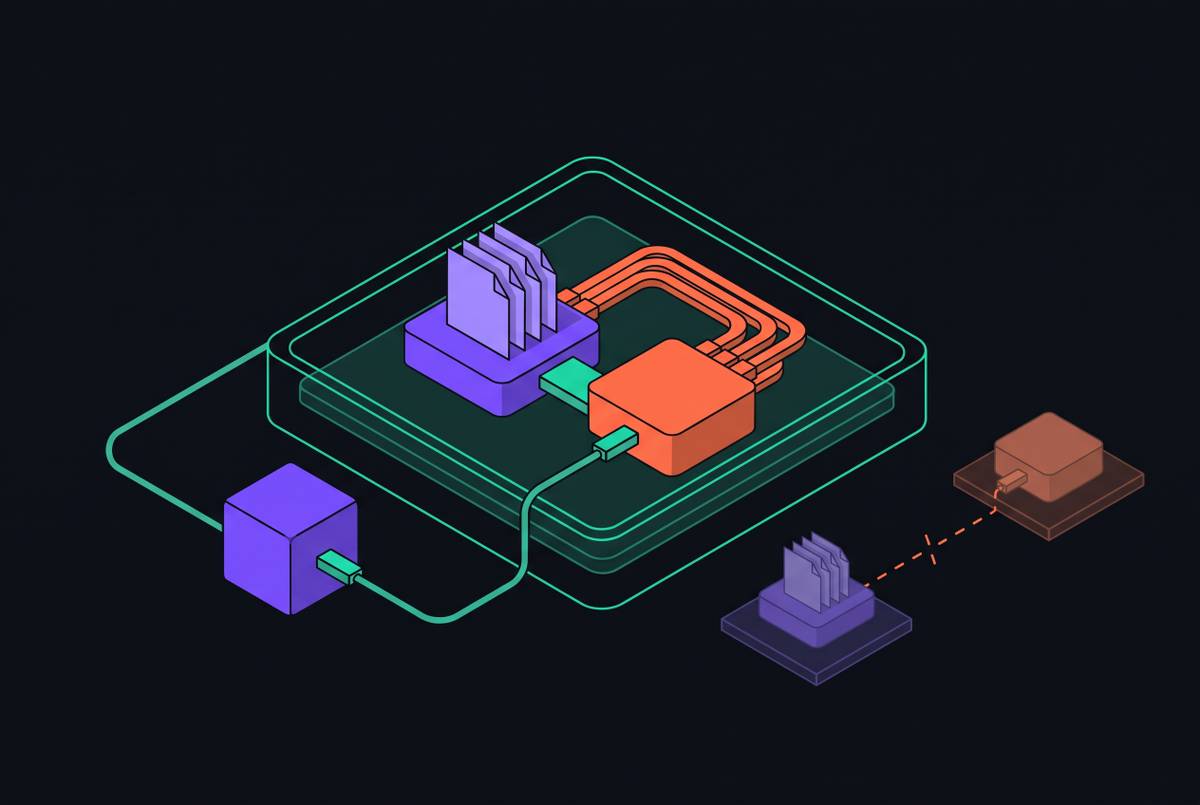
Managed hosting removes another class of work. Self-hosted crawler stacks require browser workers, queueing, retry logic, proxy rotation, and monitoring, while a managed API takes that stack off the team’s hands. Yet hosting and wiring remain separate responsibilities. A managed endpoint can still require custom adapter code, so the useful signal is an official MCP server and SDK together with stable REST endpoints that fit the orchestration layer.
MCP support does not validate the returned data. Correctness, completeness, freshness, and relevance still need separate checks, even when tool discovery and connection work cleanly. MCP servers also introduce risks including malicious code execution, credential theft, and lack of authentication. Teams evaluating them should include those risks in the assessment.
How Cloudflare’s September 2026 enforcement and emerging WebMCP change what “architectural readiness” means
The four seams assume that the crawler can reach the page. Network-level identity enforcement adds a condition before any of them can operate. Cloudflare’s official developer documentation sets September 15, 2026 as the date for updated defaults on new domains. Under those defaults, bots classified as Training or Agent will be blocked on pages that display ads, while Search will remain allowed. The three-bucket system distinguishes Search, AI Training, and AI Agent traffic.
That scope is important to the engineering decision. The policy concerns new domains and ad-bearing pages. Cloudflare protects approximately a fifth of the global web, so restrictions on crawler access have substantial reach. Cloudflare enforces its rules based on crawler identity, regardless of what a team says it plans to do. Proving that identity requires a permissioned process.
This gives managed APIs already enrolled in Cloudflare’s Verified Bot program an access advantage over self-built scrapers running from commodity proxies. The network can still block a crawler with excellent Markdown and scheduling before either feature can help. Architectural assessment therefore needs to establish who is responsible for identity and access on hard-defense targets, rather than treating a managed API as sufficient evidence on its own.
WebMCP points toward a different possible change. In its early preview form, it suggests a future in which agents query structured, site-defined APIs, bypassing HTML parsing. If that approach gains adoption, it could narrow the purpose-built versus repurposed distinction from the other direction by reducing the need for HTML extraction. Adoption at scale remains speculative. Cloudflare’s dated enforcement policy is the more actionable access issue, while WebMCP remains a direction to distinguish from a deployed standard.
How to read the four seams before writing a line of code
The practical evaluation can begin with documentation, a pricing page, and one test call. Start with a script-heavy page using default settings, then check whether the response is raw HTML, clean Markdown, or structured JSON. The format establishes the first ownership boundary. If it is HTML, the team must account for transformation before treating the response as model input.
Next, inspect the extraction contract rather than accepting “structured output” as a complete answer. The useful evidence is a developer-defined schema as input and validated typed JSON as output. Selector or parser requirements expose work still assigned to the team. For teams that need full lineage control, that work can be an acceptable choice, but it should be chosen explicitly before implementation.
For a dataset that must stay current, look for native scheduling, crawl triggers, and change detection. An endpoint that runs only when called needs an external polling layer to provide continuity. Then inspect the official MCP server, SDK, and REST endpoint design to see how the crawler connects to the orchestration layer. Setup time is a meaningful signal. Whether setup takes minutes or days can show how well the steps in the docs fit the workflow the team needs.
For Cloudflare’s September 2026 enforcement, add an identity check to that assessment. Establish whether the crawler used by the managed API is enrolled in the Verified Bot program or whether the team will own identity and network access. This is separate from checking content quality.
Direct LLM ingestion favors native Markdown or schema-validated JSON, while a continuously refreshed dataset also needs scheduling and change-aware collection. Agent workflows benefit from supported MCP and SDK connections. In-house transformation remains defensible where audit and lineage requirements justify it. The decision depends on which responsibilities the team intends to own and which the API genuinely removes.