What Makes a Scraping API Natively Agentic Versus Retrofitted for Agents
Natively agentic APIs handle fetching, observation, sessions, and tool integration as one design.
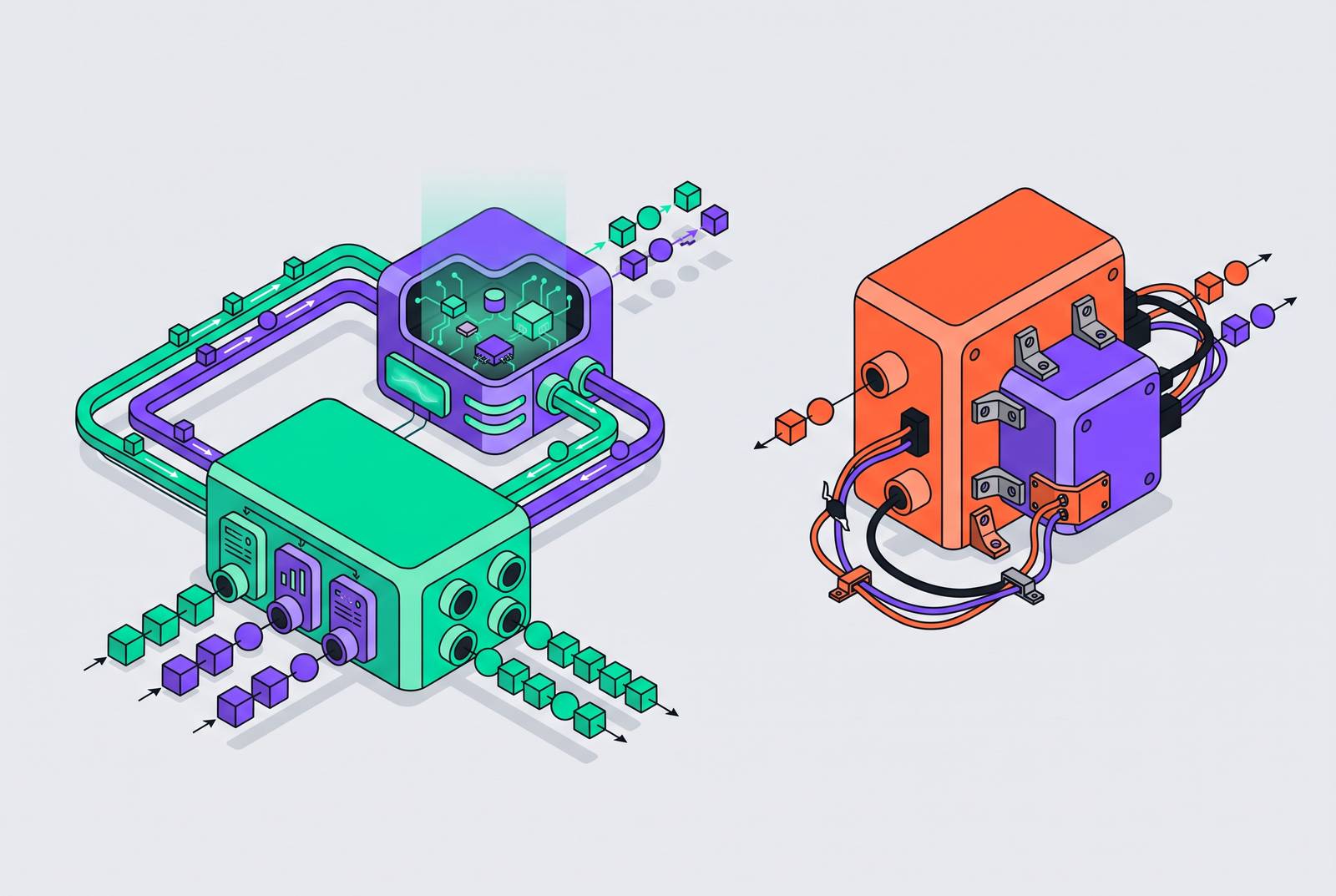
A web scraping API for AI agents and LLM pipelines is natively agentic when it handles fetching, observation, sessions, and tool integration as parts of one design. An API that only retrieves pages leaves developers to build the rest. The difference is whether an autonomous reasoning loop gets usable evidence, continuous state, and recoverable errors, or depends on brittle glue code to supply them.
Why the agent loop exposes scraping APIs differently than scripts do
Consider an agent receiving an anti-bot interstitial in response to a page request. If that response arrives with an HTTP 200 status, the request can look successful while supplying no useful evidence. The model may then reason from the wrong content or keep trying to pass a CAPTCHA. This is an illustrative failure chain. The agent failed at the web before it could assess the page.
A scripted workflow gives a developer the chance to inspect an error, adjust the code, and rerun. An autonomous loop instead treats the tool’s response as its next observation, then plans and acts from it. That changes the failure mode. A model can invent CSS selectors from memory, retry without a bound, or miss a change in location between requests. Latency, request success rate, and price still count, but they do not establish whether the agent received evidence it could safely use.
The four layers an agent depends on when it touches the live web
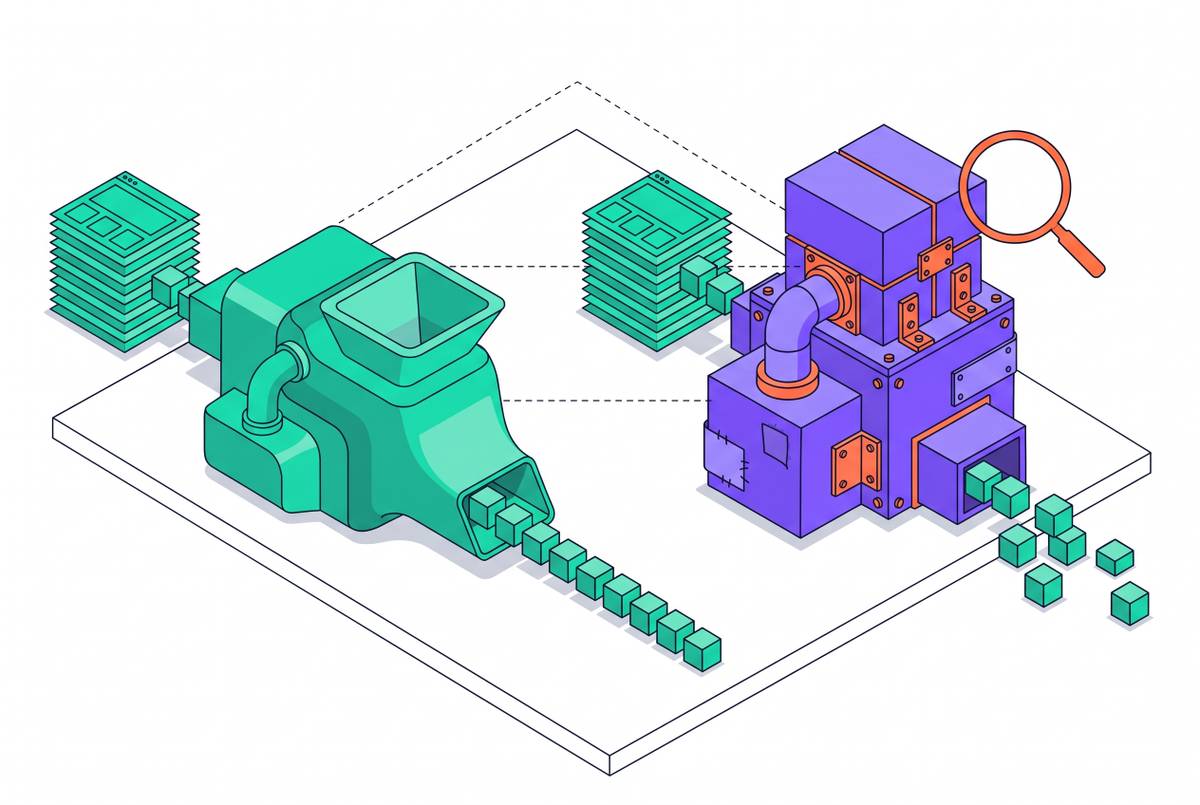
Fetching is the work of reaching the page. It includes rendering JavaScript, bypassing anti-bot systems, and handling location and consent gates. This is where most scraping APIs began. A fetch layer has to return the page content it was asked for to succeed, even if the request itself completes.
Observation turns that content into something the model can reason over. Clean Markdown or structured JSON separates useful evidence from navigation, cookie banners, and tracking scripts. With raw HTML, someone else has to do that work. The diagnostic question is whether the API supplies readable content or just the source material needed to produce it.
Sessions keep state from one request to the next. They keep cookies, authentication, proxy identity, and location from drifting as the agent moves through its task. Session continuity becomes visible only when one step depends on the state established by an earlier one.
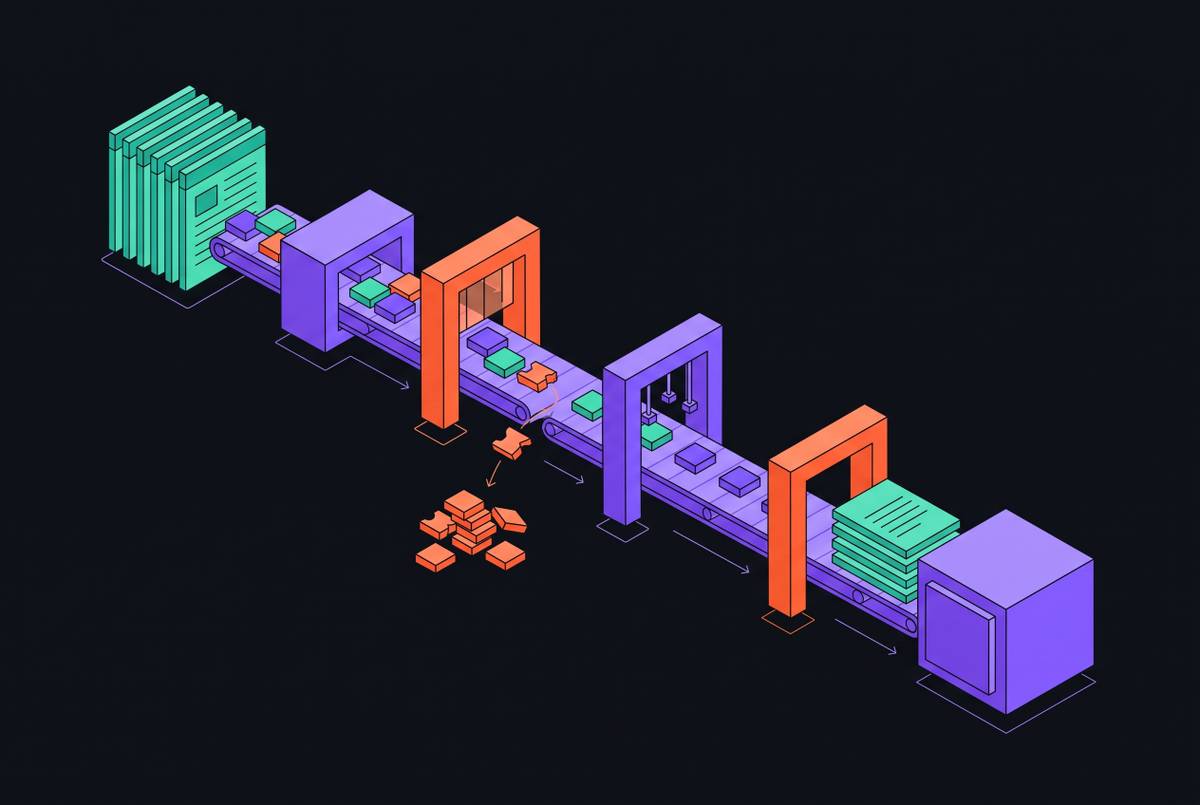
Tool integration is how the agent discovers capabilities, invokes them, and receives errors it can act on. It connects web access to the reasoning loop. Research agents, shopping agents, QA agents, and RAG ingestion pipelines all need to fetch pages, but the way each calls and uses those capabilities differs. These four distinct layers provide a diagnostic framework.
What retrofitting looks like in practice, layer by layer
When an API returns only raw HTML, the developer must build the observation layer around it. That includes HTML-to-Markdown conversion, boilerplate removal, content quality scoring, and retry logic for unusable results. Each piece needs ongoing maintenance. Conversion alone cannot tell whether the text that came back is the page content the model needs or a cleaned-up bot wall. The application must own that distinction too.
The developer has to thread cookies between calls, maintain proxy affinity, and handle re-authentication during multi-step runs. Tool integration adds another set of adapters. Each endpoint needs a tool definition, documented parameters, response parsing, and error mapping before the agent can use it reliably. Those wrappers are specific to the provider and can break when its API changes.
None of this makes REST itself the problem. A sufficiently simple, single-step pipeline may need so little glue code that a fetch-focused API is a reasonable fit. But adding authenticated navigation, unfamiliar pages, or recovery paths expands that code into infrastructure. The cost then includes maintaining provider-specific plumbing instead of building product features, and the debt grows with the agent’s task complexity.
Which scraping APIs return LLM-ready content natively rather than raw HTML?
The useful distinction is whether clean Markdown, structured JSON, or schema-driven extraction is a first-class API capability. A separate conversion step changes the format but may leave content quality for the application to handle. With native output, the API has to supply an observation the model can use, taking on the work the application would otherwise do after fetching.
That responsibility affects both cost and reasoning. With raw HTML, the model has to spend tokens on navigation chrome and tracking scripts before it gets to the content it needs. Removing that noise cuts wasted processing and makes the text the model needs easier to find in its input. Markdown serves that purpose for readable page content, while structured JSON gives a pipeline fields it can use directly.
Schema-driven extraction makes a further change in who owns the work. Instead of specifying CSS selectors tied to a page’s layout, the developer defines the shape of the desired data. The API resolves how to extract it. So the same schema can work on pages with different structures without extraction code written for each site. That is especially useful when an agent visits pages it has never seen, where a remembered selector is no substitute for inspecting the actual content.
Why session continuity is the layer that breaks multi-step agents most quietly
Session failures are easy to miss because they can return plausible content. The request completes, and the page contains readable data. Nothing forces the model to stop reasoning. Yet the site may now regard the agent as a fresh visitor, or show a localized page that no longer matches the user’s request.
The agent logs in on step one, but by step five its cookie has expired or its proxy IP has rotated. The site treats it as a new visitor. Re-authentication can trigger a fraud check and end the task, or the agent can continue using stale data. The latter is harder to spot because the final answer can sound fully confident.
Location can cause the same kind of trouble even when there is no login. An agent using a datacenter IP in one country may expect prices from another, while the site silently localizes what it returns. The model may never notice the mismatch. Local tests against easy targets do not expose the protected or personalized paths where these failures occur. Manually threading cookies, managing proxy stickiness, and writing re-authentication logic gives the developer responsibility for those paths, even when the basic fetch tests pass.
What the tool integration layer actually requires from a natively agentic API
A callable endpoint is not yet an agent tool. The agent needs a description of what the endpoint does, typed parameters it can supply, and a response it can interpret during a reasoning step. Runtime discovery is the sharpest dividing line. A native interface exposes those capabilities in schemas the agent can read, while a retrofit requires developer-written wrappers before each endpoint becomes usable.
MCP is a concrete expression of that design principle. It provides a protocol for exposing tools to an agent-facing client, so capabilities can be discovered and invoked through a shared interface. It is not the only valid implementation. The underlying requirements remain typed schemas, runtime discovery, and structured errors. An MCP interface does not substitute for clean output or continuous sessions.
Errors need as much care in their design as successful responses. A 403, an empty selector, and a bot wall present different recovery problems. An opaque failure hides those distinctions from the loop. A structured error can give the agent a basis for retrying or choosing a fallback, such as escalating from static fetch to stealth mode. This is how tool integration keeps a fetch failure from becoming an unusable observation.
Pricing also becomes part of the interface’s practical value. An autonomous loop can call the same tool dozens of times, so the cost of requests works differently than it does in a fixed script. With predictable per-call pricing, the developer can more easily estimate what a run will cost. Compute-based or per-byte charges make that cost harder to estimate before the run, especially when how many calls it makes and what they look like depend on what the agent decides next.
Change detection as a pipeline event, not a dashboard notification
Even a page that was fetched well and cleanly extracted can no longer be trusted as evidence once its source has changed. Freshness adds a temporal requirement to the four-layer framework. The pipeline needs more than a successful past crawl. An agent reasoning from stale content can produce the same confident wrong answer as one that never reached the right page in the first place.
A dashboard alert addresses a different consumer. A message saying that something changed on a page asks a person to interpret it and decide what happens next. A pipeline needs an event it can process. A structured JSON payload lets a downstream system act on the change and trigger a re-fetch and re-index without waiting for human involvement.
RAG pipelines make that dependency particularly clear. A model trained a year ago does not have last week’s policy update, so retrieval has to bring in the newer evidence. An unrefreshed vector index defeats that purpose. It keeps serving the content from the earlier crawl even though the source has moved on. Change detection belongs in the data pipeline because retrieval is only as fresh as the crawl that fed it.
How to evaluate a scraping API against all four layers before committing to it
Testing all four layers before integration can uncover retrofit debt in a few hours of testing, before it takes weeks of production maintenance to address. Start with a target that is JavaScript-rendered and protected by anti-bot systems. Inspect the status code and content to verify that the response contains the intended page rather than an interstitial or a 200-status error page. This establishes whether the advertised fetch success is useful to the agent.
Then inspect the API’s default output. Raw HTML leaves conversion, boilerplate removal, and quality scoring with the application, even if another feature can later turn it into Markdown. Test the output the pipeline will actually consume. LLM-ready Markdown or schema-driven JSON should make clear which parts of observation the API owns. The question is not whether usable content can eventually be produced, but how much infrastructure the developer must supply to get it.
For sessions, run a multi-step sequence on a target that is authenticated, geo-sensitive, or personalized. Check whether state survives between steps without application-written cookie threading or proxy-affinity logic. Easy public pages are not enough here. Later requests in the test need to depend on state from an earlier step, so a silent reset or location mismatch is visible in the test responses before the agent uses the wrong data.
For tool integration, ask whether the agent can discover typed schemas at runtime and receive structured errors it can recover from. Check for a usable escalation path when fetching fails. Check what repeated calls cost as well as a single request, and check whether changes at the source can trigger automated refreshes when the content needs to stay fresh.
The decision should follow the task’s demands. Any required HTML converter, session manager, or error-mapping wrapper is part of the integration cost. That is the retrofit signal to weigh before committing, rather than discovering it after the agent’s responsibilities have outgrown the API.
Sources
- Best Real-Time Web Content APIs for LLM Pipelines in 2026
- Best Real-Time Web Scraping Tools for AI Agents in 2026
- Top 11 Web Scraping APIs for AI in 2026 (Best Scraping APIs Compared)
- Architecting Real-Time Web Browsing for AI Agents: Tool Calling, Headless Fetching, and Latency Optimization
- Infrastructure for the Agentic Web: Gap Analysis and Architecture from the Agentverse Platform
- SentinelBench: A Benchmark for Long-Running Monitoring Agents