Metadata Filtering in RAG to Improve Source Relevance
Filtering metadata before vector search cuts retrieval noise at the source.

Most retrieval-augmented generation systems let too much irrelevant content reach the similarity search step in the first place, a structural weak point that gets far less attention than it deserves. Research from Algoverse AI Research, published as ChunkRAG, names the issue directly. Most RAG systems retrieve at the document level and lack the granularity to filter out non-essential content before it reaches the model, so irrelevant material makes it into generation and compounds the model's tendency to hallucinate. Teams spend enormous effort tuning embedding models and building reranking layers, both expensive to build and slow to ship, while skipping a step that costs far less and pays off earlier in the pipeline. Meilisearch's guide to advanced RAG techniques calls metadata filtering a low-lift, high-impact technique, precisely because it needs no heavy computation to work, unlike reranking or fine-tuning an embedding model. Retrieval quality is decided before the vector math ever runs, not after it.
Metadata filtering inside a retrieval pipeline
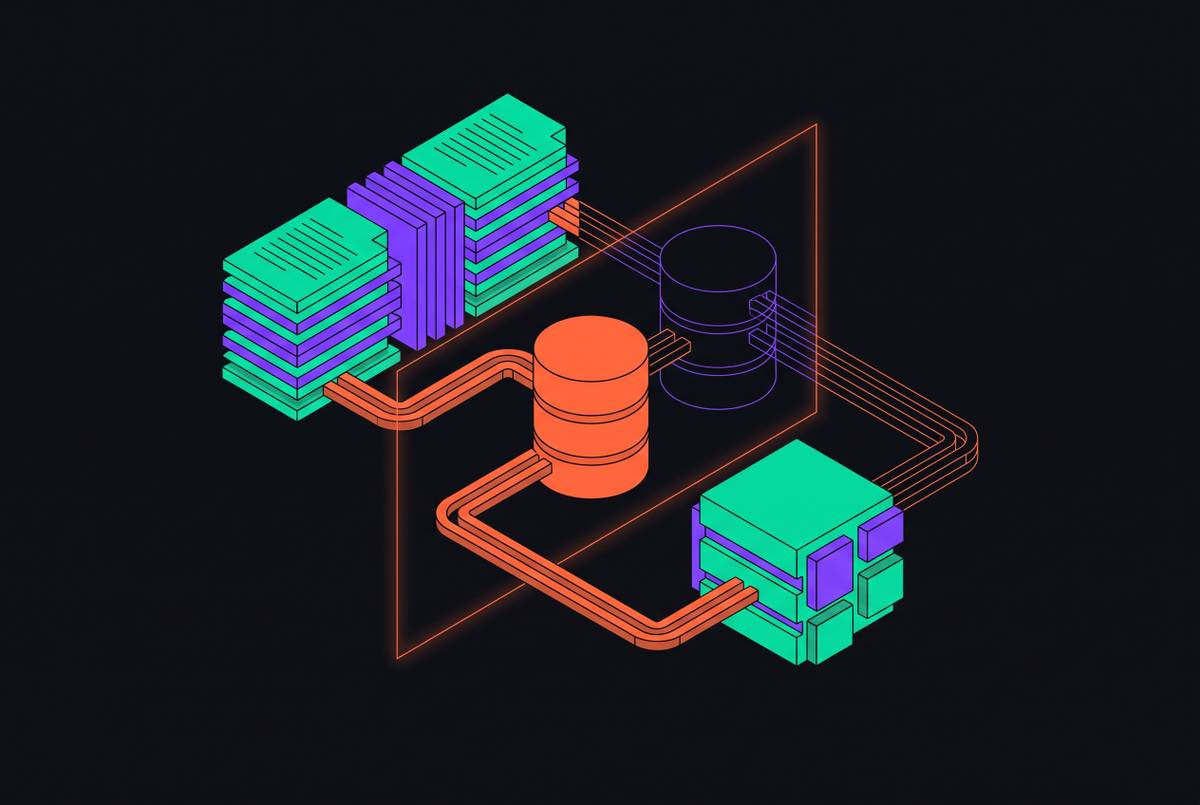
Metadata filtering acts as a gate placed in front of the similarity search. Instead of running vector comparisons against an entire index and hoping the top results are relevant, the system narrows the candidate pool first, using structured fields attached to each chunk: title, date, source URL, document type, author, access role. Only the chunks that pass the filter get compared against the query vector.
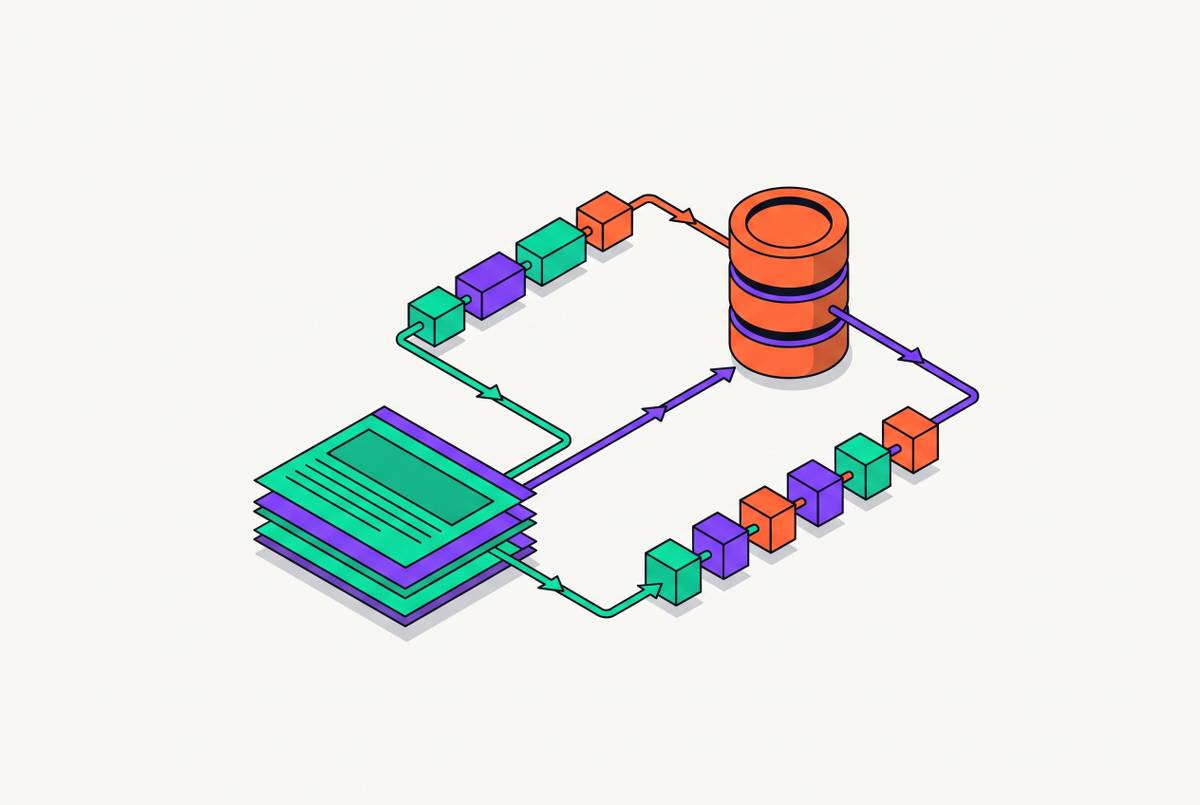
Tracing the pipeline end to end makes the distinction concrete. At ingestion, documents get split into chunks and each chunk gets embedded. Every chunk is written into the vector store carrying its own metadata fields alongside the vector itself. At query time, the filter runs first: it checks the metadata fields against whatever conditions the query calls for (a date range, a document type, a required access role) and discards everything that doesn't match. Only after that narrowing does the similarity search run, and it runs only on the surviving chunks.
That ordering affects which documents the similarity search ever gets to compare against the query. A reranker works after retrieval, reordering results the search already returned. A query rewriter works before retrieval too, but it changes the words in the query rather than the population of documents being searched. Metadata filtering changes the size and composition of the set the similarity search is allowed to search. Get that set wrong, too broad, too stale, or too noisy, and no amount of reranking afterward fully recovers what was lost.
The four main filter types and their failure modes
Four filter types cover most of what teams actually use in production: date, author or source, document type, and access role. Each one solves a real problem, and each one carries a specific way of failing if it's applied carelessly.
Date filtering removes stale content, and it matters most in domains where facts expire fast: finance, security vulnerability disclosures, software library versions. Its failure mode is aggressive recency: Meilisearch's own guidance notes that focusing too heavily on recent documents can end up excluding documents that were still essential to the answer. The fix is treating the time window as a setting per topic instead of a fixed rule applied everywhere. Volatile data such as prices, scores, and breaking news should carry a tight window measured in minutes. Stable reference material can carry a window measured in weeks.
Author and source filtering boosts documents that come from sources the system trusts, which cuts down on hallucination risk when the origin of a claim matters as much as the claim itself. Its failure mode runs opposite date filtering's: leaning too hard on a short list of known-good sources can shut out documents from origins the system doesn't recognize, even when those documents are what the query needs. Filter to trusted sources first, and if that candidate set comes back too thin, widen the filter to the rest of the index instead of returning nothing.
Document type filtering matches retrieval to what the user is actually asking for, so a question about company policy pulls from policy documents instead of blog posts or marketing pages. Its failure mode is quieter than the other two: it breaks when document-type tags were applied inconsistently back at ingestion, which produces over-filtering that silently drops documents that should have matched. Every one of these filters is only as reliable as the tagging that fed it, a dependency the next section takes up in full.
Access role filtering enforces who is allowed to see what, which makes it a governance control as much as a relevance control, and it becomes essential the moment a RAG system serves more than one class of user inside an organization. Role metadata has to be written at ingestion and kept in sync with whatever permissions system governs the source documents, because a stale role tag is a security hole, not just a relevance problem. It's a security hole.
Metadata quality at ingestion and filter reliability
Every filter type above traces its reliability back to the same upstream dependency: the metadata written at ingestion. A filter can only act on the fields it's given, and if those fields are missing, inconsistent, or out of date, the filter doesn't fail loudly. It fails quietly, admitting documents that shouldn't pass and excluding ones that should, in ways that are hard to trace back to the filter itself.
That consistency has to survive a step that's easy to overlook: chunking. When a document gets split into smaller pieces for embedding, each resulting chunk has to inherit the parent document's metadata, its date, source URL, author, document type, and access role, along with any metadata that only makes sense at the chunk level, like a section heading or a position in the document's hierarchy. If that inheritance step gets missed, a chunk arrives at the vector store with half its metadata missing. Every filter checking that field either skips the chunk it shouldn't or keeps it when it shouldn't.
This is why "low-lift" describes the filtering mechanism, not the work required to make it reliable. The mechanism at query time costs almost nothing to run. The metadata pipeline that feeds it is where the actual engineering effort belongs, and it's a data pipeline problem before it's a retrieval problem. The quality of what gets tagged at ingestion sets a ceiling on what any filter downstream can achieve, and no amount of clever filter logic at query time raises that ceiling. Which raises the practical question the rest of the pipeline depends on: where does clean, consistent metadata actually come from at ingestion, especially for content pulled from the web?
Structured web extraction and filter metadata
For any RAG system built on web content, metadata quality depends on scraping and extraction. Raw HTML brings along navigation menus, ads, cookie banners, and inconsistent markup that varies from one site to the next. None of that raw structure gives a filter anything to act on. A filter needs typed, predictable fields, and schema-defined, LLM-ready extraction is built to produce exactly that.
The mechanism is straightforward: define a JSON schema before extraction runs, specifying fields like publish date, author, document type, or product category, and the extraction tool returns a structured object matching that schema for every page it processes. Every chunk built from that page carries the exact fields the filter layer expects, set once at extraction time rather than guessed at with fuzzy parsing when a query comes in.
A few tools illustrate what this looks like in practice. Crawl4AI is a free, async Python library built for AI-focused crawling. It renders JavaScript through Playwright and returns cleaned HTML, Markdown, a stripped-down "fit" Markdown version, structured extraction output, links, media, and metadata in one pass. It also splits content into chunks meant for vector database storage, so the handoff from extraction to chunk-level metadata is built into the tool rather than bolted on afterward. Some extraction tools take a different approach: instead of relying on page selectors, they apply AI that reads web content semantically, and typed extraction APIs return entities, articles, products, discussions, images, videos, ready to use, with a separate knowledge graph product available for enriching that data further. That approach suits a task like pulling every product listed on a page as a normalized schema.
The reason this matters goes beyond convenience. Scrapers built on brittle selectors break the moment a target site changes a CSS class name, and that breakage doesn't announce itself. Tools built with self-healing selectors and LLM-powered extraction avoid the maintenance cycle that has historically made web-sourced metadata unreliable at scale. Solve that reliability problem at the extraction layer, and every filter built on top of it, date, source, document type, access role, has something solid to work with.
Self-query retrieval: letting the model infer the right filter from natural language
Well-structured metadata only pays off if something at query time actually knows how to use it. Hard-coding filter logic for every query type works at small scale, but it breaks down as a document corpus grows across more topics, more sources, and more document types. Writing explicit rules for every combination becomes its own maintenance burden, and it caps how well the system can generalize to questions nobody anticipated when the rules were written.
Self-query retrieval solves this by having the model read the query itself and infer which filters apply. LangChain implements this pattern through its self-query retriever, which reads a natural language query, pulls out the filter conditions implied by it, terms like "recent," "from trusted sources," or "policy documents," and builds the metadata filter automatically before similarity search runs. Developers using the pattern define which metadata fields are filterable, and the model handles constructing the actual filter from there.
That pattern only works if the underlying vector store can act on the filters the retriever produces. Pinecone and Weaviate both store vector embeddings alongside metadata and support filtering search results by that metadata, which is the infrastructure self-query retrieval needs to function. Without a vector store that supports metadata filtering natively, an inferred filter has nowhere to be applied.
What this unlocks in practice is a meaningful shift in what the end user has to know. Someone asking "show me the latest compliance updates from internal policy documents" doesn't need to know that a date filter and a document-type filter exist, let alone how to invoke them. The retriever infers both from the phrasing, applies them, and returns a candidate set that would otherwise have required someone to write explicit filter code for that exact combination of intent.
Freshness as a special case: routing between indexed and live web content
Date filtering has a ceiling that no amount of tuning removes: it can only work with what's already in the index, and for fast-moving topics, prices, security vulnerability disclosures, library versions, live scores, the newest document sitting in the index was already out of date by the time it got ingested. No TTL setting fixes a document that was stale on arrival.
Routing the query somewhere other than the vector store handles cases where freshness demands it. A freshness signal detected in the query, or a TTL policy set per topic, triggers a live web fetch instead of a lookup against the indexed corpus. Stable reference material keeps drawing from the index as usual. Volatile information gets fetched at the moment the query comes in and gets placed directly into the prompt.
The NeurIPS FreshStack benchmark backs this up with a measured result rather than an assumption. Freshness is a measurable driver of answer accuracy.
Turning that into a working policy means setting TTL windows per topic instead of applying one threshold everywhere. Volatile data, prices, breaking news, live scores, needs a window measured in seconds to minutes. Stable reference content can run on a window measured in hours to weeks. Encoding that difference into the routing logic is what makes hybrid retrieval work: the system checks a topic's TTL, decides whether the index is still fresh enough to trust, and only reaches for a live fetch when the indexed version has aged out. That decision runs on the same metadata infrastructure covered earlier: a live fetch still needs to return content in a schema the filtering and chunking pipeline can consume, so the extraction layer feeding the index and the one feeding live grounding draw on the same underlying discipline.
Using change detection to trigger reindexing rather than polling on a schedule
Hybrid routing handles freshness at query time, but it doesn't solve the separate question of when the index itself needs to be refreshed. Polling every source on a fixed schedule, checking for updates every hour regardless of whether anything actually changed, wastes compute on sources that rarely update and still misses changes that happen between poll intervals on sources that update constantly.
Change detection flips that model. Instead of checking everything on a timer, the system watches for an actual change at the source, a new publish date, an updated hash of the page content, a modified field in a structured feed, and triggers reindexing only when something has genuinely moved. A page that hasn't changed in months doesn't get re-crawled, re-chunked, and re-embedded on the same schedule as a page that updates daily.
This closes the loop the rest of the pipeline depends on. Metadata filtering narrows what similarity search sees. Metadata quality at ingestion decides whether those filters have anything reliable to act on. Structured web extraction supplies that metadata in a consistent, typed form. Self-query retrieval puts it to use without hand-coded rules. Hybrid routing catches the queries where even a well-maintained index can't be fresh enough on its own. Change detection keeps that index from drifting stale in the first place, triggering updates based on what actually changed at the source rather than what a schedule assumed might have changed. Each piece depends on the one before it, and none of it compensates for a weak link elsewhere in the chain.
Sources
- 9 advanced RAG techniques to know & how to implement them [2026]
- ChunkRAG: Novel LLM-Chunk Filtering Method for RAG Systems
- Metadata-aware RAG for Enforcing Access Control and Metadata-based Filtering: Proof of Concept and Evaluation
- Metadata-Driven Retrieval-Augmented Generation for Financial Question Answering
- Enhancing RAG Performance with Metadata: The Power of Self-Query Retrievers
- Multi-Meta-RAG: Improving RAG for Multi-hop Queries Using Database Filtering with LLM-Extracted Metadata