Extracting Product Data From E-Commerce Sites at Scale
Building production pipelines beats writing scrapers when prices and inventories shift hourly.
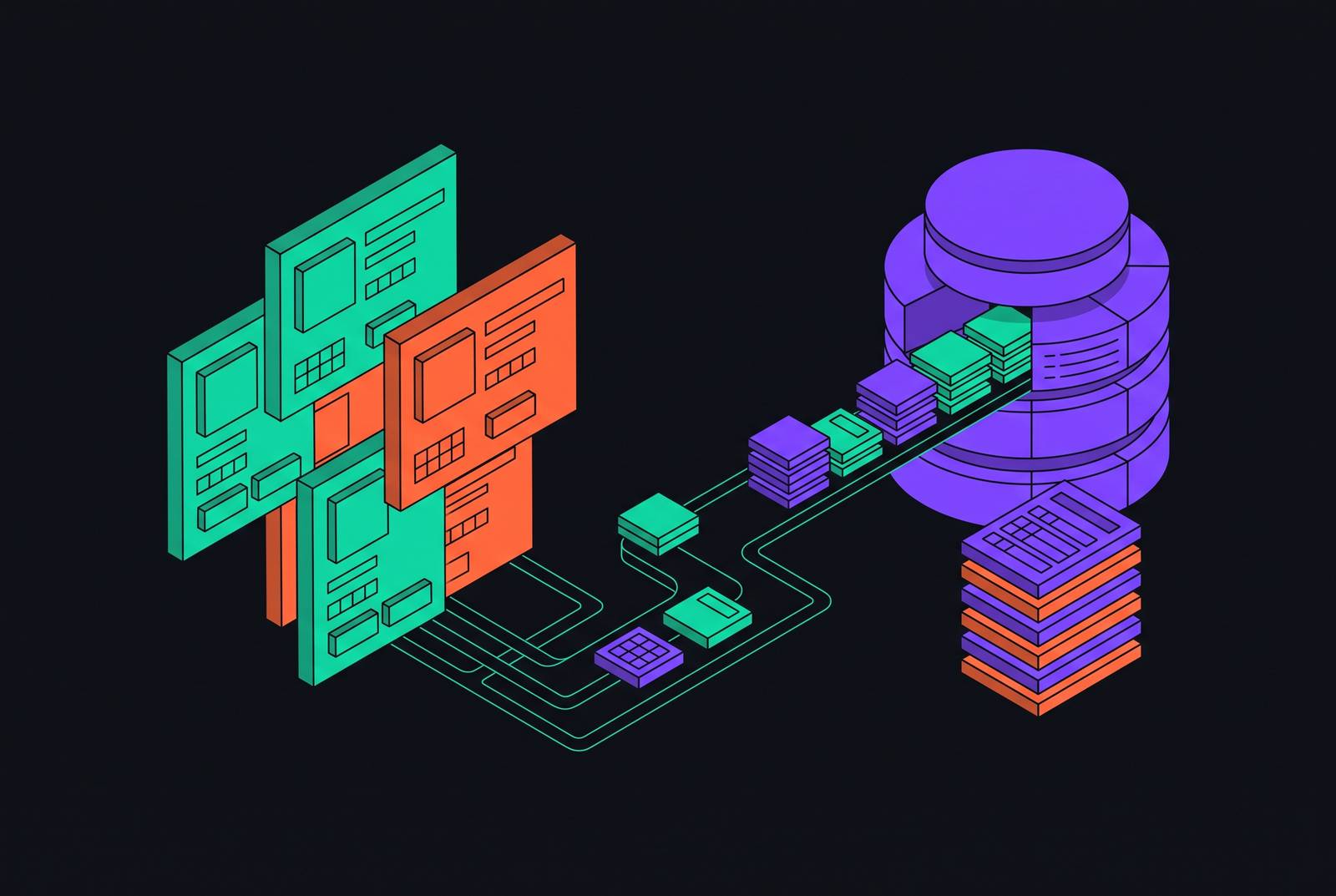
Extracting product data from e-commerce sites at scale is no longer a scraping task. It is a pipeline engineering discipline. What follows is a map of the patterns that separate a production pipeline from a script.
Why product data extraction has become a pipeline engineering problem
The defining shift is that product data extraction has stopped being a retrieval task and become a continuous operational workflow. Major marketplaces adjust prices continuously, sometimes multiple times per day. Product catalogs change just as fast: new products launch, listings get discontinued, and seasonal assortments shift on timescales that quarterly or even weekly manual review cannot match.
The consequence is that a one-time pull that looks correct at extraction time can quietly corrupt pricing models, inventory signals, and AI outputs within hours. Nothing alerts you when that happens. The data simply goes bad in place.
What follows is that the engineering discipline required is scheduling, matching, validation, and monitoring. That stack is what separates a production pipeline from a script. The rest of this piece is about building that stack deliberately rather than discovering its absence through downstream failures.
What a production e-commerce data pipeline must actually collect
The range of extractable product data has expanded well beyond price, and each category carries its own freshness and accuracy requirements that shape how the pipeline must be built. Core product content includes titles, descriptions, SKU identifiers, category classifications, specifications and attributes like size, color, material, and weight, plus image URLs and brand and manufacturer information. This layer changes slowly but matters everywhere.
The pricing layer is more volatile: current selling price, list or MRP, discount and promotional pricing, shipping costs, and bundle and multi-buy offers. Availability signals sit next to pricing. In-stock status and quantity signals shift on timescales shorter than a daily crawl for high-velocity categories.
Ratings and review data add another dimension. Star scores, individual review text, verified purchase indicators, review dates, helpful vote counts, and seller response data are valuable for sentiment analysis and quality monitoring, but they are voluminous. Seller and marketplace data rounds out the taxonomy: seller names and ratings, Buy Box ownership, best-seller rankings, advertising presence, and fulfillment method. This layer is critical for MAP enforcement and unauthorized-seller detection.
Each category has a different volatility profile. The practical implication is that a single uniform crawl cadence is a design mistake. The pipeline must match refresh frequency to data volatility per field or category.
Why JavaScript rendering is the first technical gate every pipeline must clear
Most of the high-value product data fields listed above are loaded by JavaScript, not present in raw HTML. Collecting only raw HTML from a JavaScript-heavy product page returns a partial document. Fields appear empty not because they are absent but because they were not yet rendered.
Browser-based scraping with headless browsers that execute JavaScript is the standard response, but it is slower and more resource-intensive than HTML parsing. The decision stack import.io's 2026 guide identifies has three tiers: HTML parsing for simple pages, browser-based scraping for dynamic content, and API collection where endpoints exist. Most real pipelines combine at least two of these.
The additional complication is that anti-bot systems on heavily protected platforms have moved beyond simple fingerprinting to behavioral profiling. They evaluate the coherence of the entire session, not individual signals. The implication for pipeline design is straightforward: rendering must be treated as a first-class infrastructure concern with its own reliability budget, not an afterthought bolted onto an HTML parser.
How schema-driven extraction replaces fragile selectors with a durable output contract
Brittle CSS selectors and XPath break whenever a site updates its layout. A JSON Schema contract defined by the developer makes the desired output the stable anchor, not the page's DOM structure. When the site updates its template, the selectors return wrong fields, empty strings, or nothing, often silently.
The professional standard now is LLM-driven extraction with JSON Schema as the contract. The developer declares what fields to extract and their types. The extraction layer infers them from the rendered page regardless of how those fields are labeled or nested in the DOM. Schema-aware extraction treats these as equivalent without a manually written rule per variation.
APIs that accept either a formal JSON Schema or a plain-English prompt and return validated JSON represent the current mature interface for this pattern. The objection is that schema-driven extraction depends on the LLM correctly identifying fields, which is a probabilistic inference. Validation catches the gap rather than propagating it.
Product matching and normalization — where extraction accuracy actually gets decided
Extracting the right fields from a single page is the easy part. Reliably identifying the same SKU across retailers with different titles, identifiers, and categorizations is where pipelines produce misleading output. import.io's 2026 guide is explicit: product matching across retailers and data validation are where reliability is won or lost. An unmatched product or a promotional price mistaken for the base price can quietly push bad data into dashboards and pricing systems.
The structural problem is that the same physical product listed on five retailers may have five different titles, five different category placements, and two or three different identifiers: GTIN, UPC, ASIN, or internal SKU. Pack sizes, color variants, and bundle configurations multiply this problem. A 6-pack listing must not be price-compared to a single-unit listing without normalization to a per-unit effective price.
The marketplace-specific complication is that on multi-seller platforms, the same ASIN can have different Buy Box winners, different seller ratings, and different fulfillment methods. What follows is that SKU-level accuracy is a pipeline design requirement, not a data cleaning step. The matching logic must be built into the schema and validation layers, not applied after the fact.
Freshness, scheduling cadence, and the silent failure problem
The most damaging quality failure mode in e-commerce data pipelines is the silent one. Decisions get quietly corrupted for days or weeks before anyone notices. A pipeline that returns data on schedule but returns stale or empty data without raising an alarm is more dangerous than one that fails visibly, because it poisons downstream decisions with false confidence.
Robust pipelines validate coverage, not just completion. The check is not "did the job finish?" but "did the job return the expected number of records, and are the values within expected ranges?" Scheduling cadence must follow volatility, not convenience: intraday for pricing in fast-moving categories, daily for availability and assortment, longer cycles for review data and product content.
Retention of out-of-stock items is a specific best practice. When a product goes out of stock, the correct action is to flag it with a status field and retain the record. Dropping it means the pipeline shows the absence of data as the absence of the product, which is misleading. A price field with a 4-hour TTL that has aged 18 hours should be treated as stale, not used.
Alert logic should fire on absence as well as errors. A team maintaining dozens of bespoke scrapers will find it difficult to implement consistent coverage validation across all of them simultaneously. A single extraction layer with uniform output schemas makes pipeline-wide freshness monitoring tractable.
Agentic and RAG use cases that demand live product data rather than indexed snapshots
AI agents and RAG systems built on indexed product snapshots have a structural defect. For e-commerce data, that gap can be hours or days wide. A product availability check, a price comparison, or a MAP violation alert built on a RAG index is answering questions about the past, not the present.
The architectural fix is a live-fetch layer at query time. The agent fetches and parses the current page, converts it to LLM-ready structured content, and grounds its response on that, not on what was indexed during the last crawl. Rather than one-shot retrieval, an agent plans which pages to fetch, observes the results, and replans. It visits category pages to discover product URLs, follows pagination, detects variants, and assembles a complete dataset autonomously.
MCP integration is the protocol-level expression of this pattern. An extraction API exposed as an MCP tool allows agent runtimes to invoke page fetches and structured extraction as native tool calls, with no hand-written wrapper code. For e-commerce product data, where reality changes by the hour, this is not an architectural preference but a functional requirement.
MAP enforcement and brand protection as a structured extraction use case
For brands selling through third-party retailers, the same pipeline infrastructure that powers competitive pricing intelligence is also the mechanism for detecting MAP violations and unauthorized sellers. It requires coverage and freshness guarantees that commodity scraping cannot provide. MAP enforcement requires knowing that a retailer's current listed price is below the MAP threshold, which means the price data must be fresh enough to act on, not a day-old snapshot.
Unauthorized and gray-market seller detection requires coverage of reseller pages the brand did not authorize, which means crawling beyond known retailer lists to discover new listings. Counterfeit detection adds a product content dimension. Scraping images, descriptions, and specifications from suspected listings and comparing them against canonical brand data requires schema-driven extraction of brand and visual identity fields, not just price.
The seller and marketplace data layer is the primary signal for distinguishing authorized from unauthorized distribution. Seller names, ratings, Buy Box ownership, and fulfillment method carry that signal. This use case makes the coverage validation argument concrete. A MAP monitoring system that silently misses 15 percent of reseller pages is not a monitoring system. It is a false confidence generator.
Legal boundaries and compliance practices that belong in the pipeline design, not the legal review
Compliance with the legal boundaries around e-commerce scraping is not a post-hoc review step. It is a set of constraints that must be encoded into which data the pipeline collects, how it stores it, and how access is logged. This is general information, not legal advice, but it belongs in the design conversation.
The governing case law in the U.S. rests on hiQ v. LinkedIn, which confirmed that scraping publicly accessible data likely does not violate the Computer Fraud and Abuse Act. The risk boundary that has sharpened is different. Recent litigation has shifted toward DMCA Section 1201 anti-circumvention claims, elevating scrutiny on mechanisms that bypass access controls. A pipeline that circumvents authentication or paywall mechanisms faces different legal exposure than one collecting open product pages.
GDPR constrains scraping of personal data. The pipeline design must either exclude PII fields or route them through appropriate governance. Platform-level enforcement has hardened independently of litigation. Cloudflare began blocking AI-based scraping by default in July 2025, and many enterprise platforms now preemptively deny bot traffic even from legitimate sources. The EU's Digital Services Act Article 40 creates a corresponding opening: designated Very Large Online Platforms must provide data access for vetted researchers, which may create a structured, compliant access channel for some use cases.
Why building and maintaining extraction infrastructure in-house compounds as a liability rather than an asset
The true cost of DIY extraction infrastructure is not the setup cost but the compounding maintenance burden. Building a proof-of-concept scraper is fast. Keeping hundreds of scrapers reliable as sites change their layouts, load logic, and bot defenses is a permanent engineering commitment.
The maintenance surface is wide: proxy management, browser fleet infrastructure, selector updates on site redesigns, anti-bot adaptation, coverage monitoring, and quality validation. Actowiz's 2026 guide frames the build calculus directly: building makes sense if web data is the core product or needs are small and stable. For most teams, a managed provider is more reliable and cheaper once the true cost of maintenance and reliability is counted.
The scale at which the calculus flips is lower than teams expect. Once a pipeline covers more than a handful of domains or requires intraday refresh on thousands of SKUs, the maintenance overhead becomes a dedicated engineering function. A well-designed external API with consistent schema output and coverage guarantees delivers more predictable quality than a partially-maintained internal stack.
What a consolidated extraction API should provide for production e-commerce pipelines
A single, well-designed extraction API that handles rendering, schema-driven parsing, crawling, and freshness management is a better foundation for production e-commerce pipelines than a stack of point solutions assembled around a bespoke scraper. The API must handle JavaScript rendering and return fully rendered content, not raw HTML. It must accept a developer-defined JSON schema and return validated, typed data, not raw text requiring downstream parsing. It must traverse category pages, pagination, and product URL discovery autonomously, rather than requiring the caller to enumerate every target URL.
For RAG and agent use cases, the API must convert page content into clean, structured Markdown that can be embedded or passed directly to a model. And it must be callable as a tool from agent runtimes without requiring hand-written wrappers. One well-designed API that handles rendering, parsing, crawling, and agent integration beats maintaining separate solutions for each, not just on cost, but on the coherence and reliability of the data layer the product depends on.