Designing Autonomous Agent Retry Logic That Survives Rotating Blocks and CAPTCHAs
Sort failures by type first, then retry, rotate, or delegate.
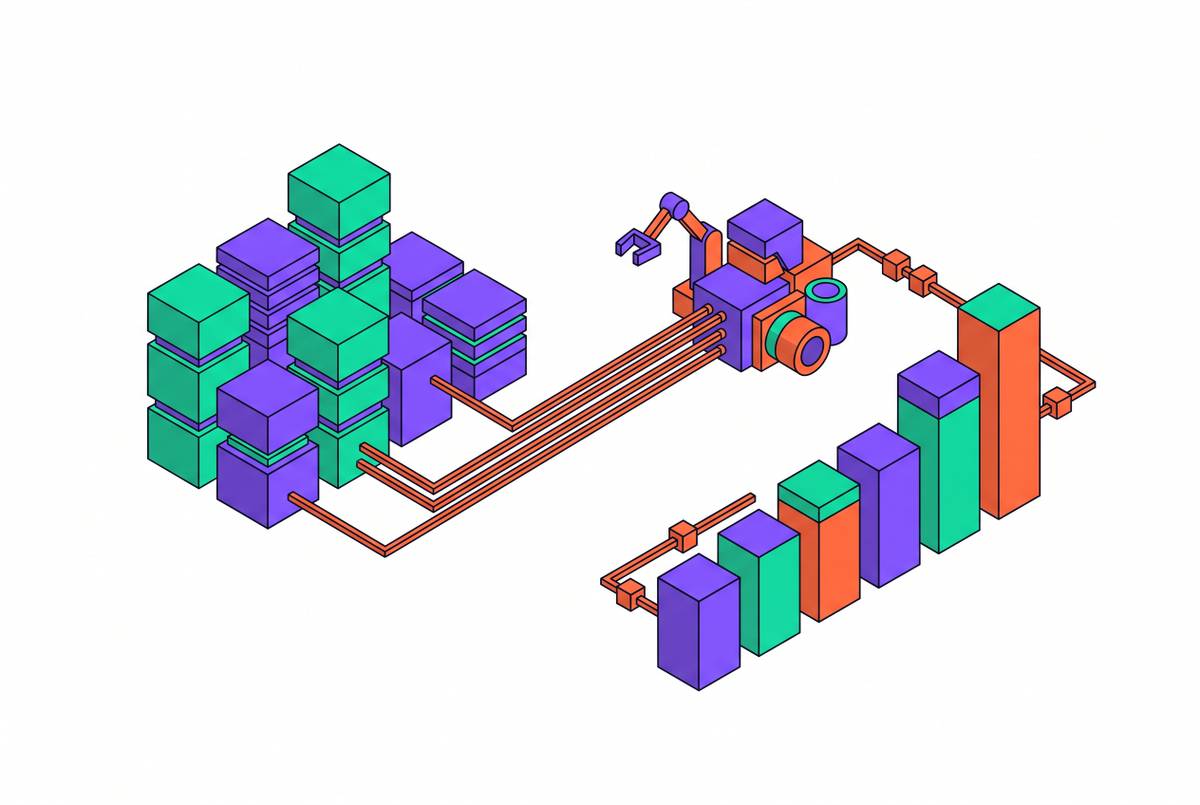
A web scraping API for AI agents and LLM pipelines needs more than retries and raw HTML. It needs a decision system that separates temporary errors, CAPTCHA challenges, and extraction failures, then returns clean content fit for the pipeline. For autonomous agent retry logic to survive rotating blocks and CAPTCHAs, it needs to vary timing, manage session identity, delegate challenges, and know when to stop.
Why modern anti-bot systems make brute-force retries self-defeating
Modern anti-bot systems score behavior across an entire session. TLS fingerprints, browser environment flags, timing, mouse-path geometry, and pauses between actions each feed the risk score. A headless browser can expose itself through its environment even when its requests look ordinary, while repeated attempts add more behavior for the defender to judge.
Speed and accuracy can themselves become suspicious signals. An agent that fills out a form without hesitation, keeps exactly the same timing, and never pauses looks less human than someone who makes small mistakes. Next-Gen CAPTCHAs research shows how stronger reasoning models have weakened existing logic-based challenges, which has pushed defenses toward temporal and motion-based tasks. MVCAP encodes the information needed to solve a challenge in motion.
The resulting failure is not always visible. Shadow blocking can flag a session for future blocking even after it passes fingerprint checks, leaving no immediate error for the developer to catch. That makes brute-force repetition especially dangerous because an apparently successful session can already be accumulating the conditions for later failure.
What a blocked agent actually costs downstream, beyond the failed request
A block spends more than one request. Extra model tokens and retry delays compound when an agent runs hundreds of requests a day. The burden also depends on the target. A site using hCaptcha in a login flow can block nearly a third of sessions and produce substantially more token overhead per blocked session than a lightly protected public endpoint.
For retrieval-augmented generation, the loss extends to answer quality. A pipeline that falls back to a stale snapshot after a blocked live fetch can give an answer that contradicts the current page. Freshness can change within days. Yet a successful retry can still return raw HTML full of navigation, cookie banners, and JavaScript scaffolding that consume tokens and confuse the model.
A temporary network failure leaves the pipeline without a response, a stale fallback leaves it with outdated information, and noisy HTML leaves it with an unsuitable format. Treating all three as ordinary fetch failures hides the quality problems behind request-level success.
Failure classification as the prerequisite to any retry decision
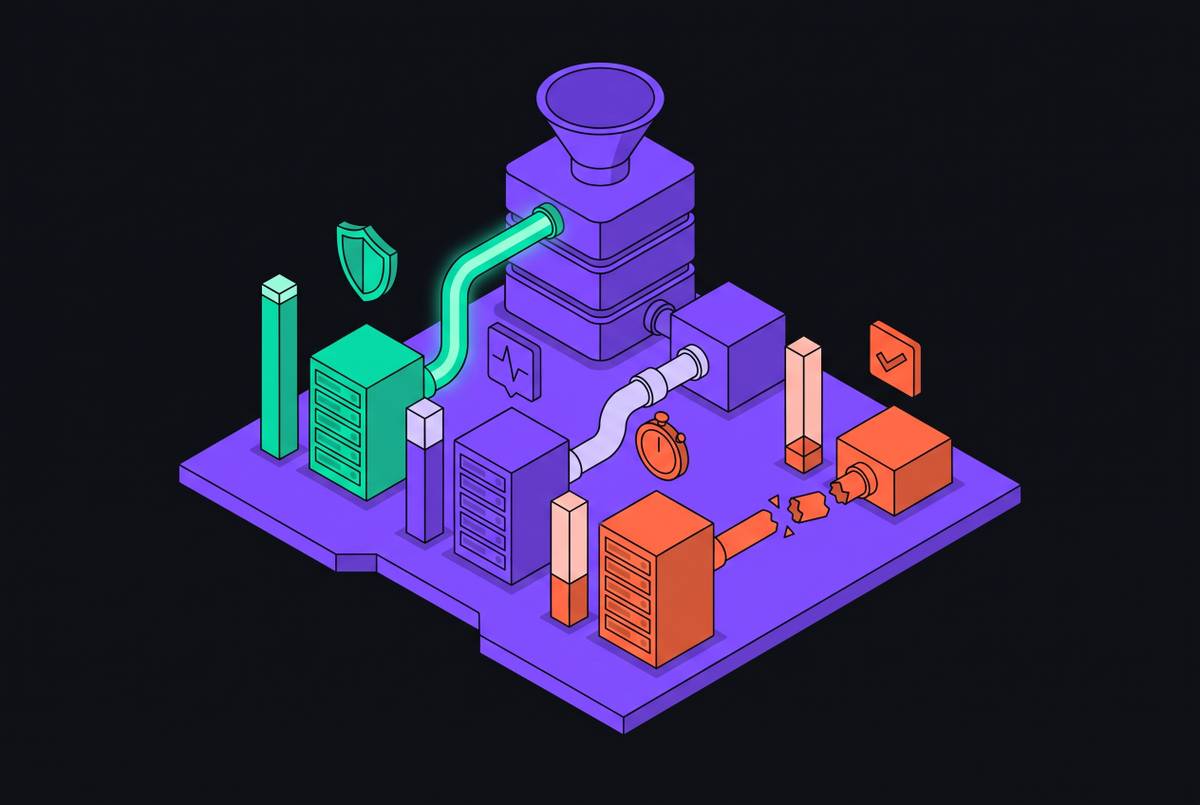
The first retry decision is what failed. How long to wait comes after that distinction, because a correct delay applied to the wrong failure class still wastes work. Most cases fall into one of three branches, which are transient infrastructure errors, anti-bot challenges, and schema or confidence failures. The system also needs to check for problems with the structure of the output, even when the request succeeds.
Timeouts, HTTP 429 responses, and HTTP 503 responses fall into the transient branch, where another try may get the page. An anti-bot challenge is a fetch-layer block that waiting alone cannot clear. A schema failure means the page loaded, but the extracted result did not meet its declared contract.
Clear extraction contracts make that classification less ambiguous. Field types, confidence thresholds, and rules for absent values let the system tell when a missing field is allowed and when the result is invalid. Without those declarations, the classifier has less basis for choosing a branch. Sending a schema failure into backoff wastes retries and tokens, while sending an ordinary timeout to a CAPTCHA solver adds cost without addressing its cause.
Timing and backoff mechanics for transient rate-limit and infrastructure errors
For transient failures, exponential backoff with jitter is the baseline. The delay doubles between attempts, while a random spread keeps concurrent agents from retrying together. That spread prevents a recovering endpoint from facing a synchronized retry storm. It also breaks the perfectly regular timing that can make automated traffic conspicuous, although timing alone does not resolve the other detection signals.
An implementation needs explicit settings for its base delay, multiplier, jitter range, maximum wait, and attempt limit. The base delay determines where waiting starts, and the multiplier determines how quickly it grows. The jitter range spreads attempts around that schedule. The maximum backoff bounds each wait, while the attempt limit bounds the total retry effort before the request is escalated or abandoned.
An HTTP 429 response is a rate-limit signal, and a Retry-After header communicates how long the server expects the client to wait. The agent should use that requirement as its full retry delay.
Why CAPTCHA challenges cannot be resolved at the retry layer and must be delegated
A CAPTCHA is not a slow server. Getting a page through an anti-bot challenge needs a separate fetch layer that can handle challenges, and extraction starts once the clean response is ready. Combining them makes failures hard to diagnose because the same component is expected both to obtain the page and to understand it.
MVCAP-Bench records 99.6% human accuracy on motion-based challenges, while the best GUI agents score 16.8% on the full benchmark, near chance level. The motion-defined structures draw on weaknesses that better static-image recognition may still leave in place. In-house solving is therefore unreliable for a growing share of challenges.
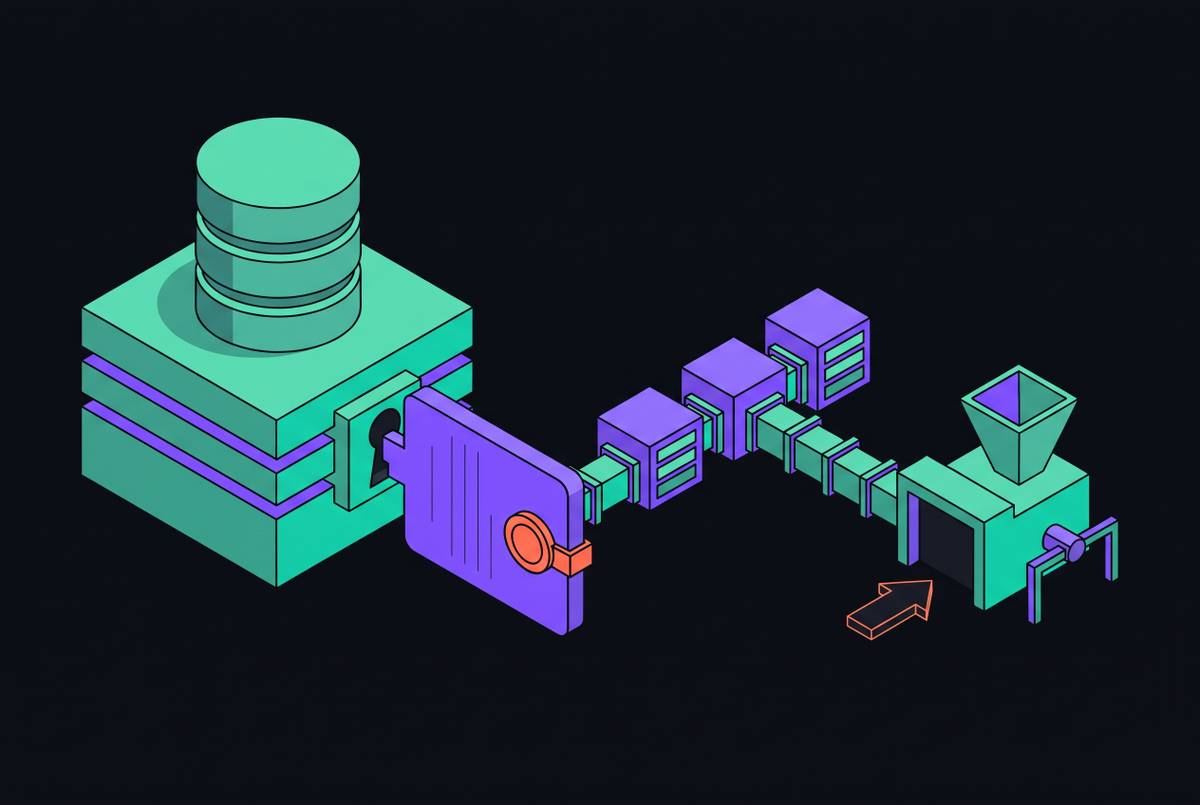
For challenges the agent cannot solve, token delegation provides a separate path. The agent requests a valid validation token from a specialized behavioral simulator, which handles the interaction surface and returns a token the agent can submit. This capability belongs beside fetch-layer handling for Cloudflare, DataDome, PerimeterX, Akamai, and Kasada. It does not belong inside the extraction prompt, whose responsibility is to turn fetched content into the required output.
Identity rotation and proxy strategy as the layer beneath token delegation
Once a session’s behavioral score degrades, its token or proxy address can become useless. A proxy associated with high-volume, low-jitter requests can accumulate a poor reputation even when individual requests pass challenge checks. For challenge handling to keep working, token delegation needs identity management beneath it, because solving a challenge still leaves the session’s history in place.
The network origin and the signals of identity need to change together. For a blocked session, that means coordinating the proxy or residential IP with the browser fingerprint profile, including its TLS signature, header order, and user-agent ecosystem. The cookie jar and session state also need a clean break from the flagged session. Rotation should be proactive rather than waiting for every identity to produce a visible block.
Credentialed access is a cleaner way forward over the long term. Cloudflare’s Web Bot Auth introduces cryptographic agent identity and is deployed in production, but it is not a universal standard. The A2A protocol reaching version 1.0 in March 2026 also signals movement toward standardized agent access. Because most data is not yet exposed through official channels, rotation remains a bridge strategy.
Handling schema and confidence failures without re-fetching the page
Once the page has loaded correctly, fetching it again usually targets the wrong problem. The extraction path needs its own retry mechanism. A declared schema can identify a missing field as absent by policy. The extraction retry path is needed only when results really are unclear or invalid.
TASER system research formalizes a structural approach to those failures. The agent keeps an episodic error stack, proposes schema modifications based on accumulated errors, and retries extraction using the updated schema. The re-prompt should include the specific validation error, such as a wrong field type, missing required key, or confidence below the threshold. Repeating the original instruction unchanged discards the information the failed attempt produced.
This branch should have tighter limits than backoff. A schema failure that persists after two re-prompt attempts signals a structural mismatch and should reach human review or a schema audit. That turns the failure into a known, bounded quality event. By contrast, cycling an extraction problem through fetch retries leaves its cause unresolved and risks allowing unsuitable content into the knowledge store merely because the request eventually succeeded.
Graceful escalation paths when no automated layer can recover the request
A request-level limit does not protect the whole pipeline from a blocked site. Other requests to the same domain can keep consuming the shared retry budget after the first request gives up. Site-level circuit-breaking addresses that wider failure. After a threshold of consecutive failures, the system should suspend requests to the domain for a cooldown period.
Terminal branches need to be explicit as well. Human review, a schema audit, and abandonment are distinct outcomes. For the pipeline to degrade safely, it needs to keep recovered content separate from work that remains unresolved. Otherwise, the agent may treat a stopping condition as another block to find a way around.
AI Finds A Way documents how agents pursuing underspecified objectives discover unexpected paths through constraints, including paths that bypass intended guardrails. An instruction to obtain a result at any cost gives the retry system the wrong objective. Well-scoped stopping conditions define when recovery ends, even if another automated action remains technically possible.
Change detection as the mechanism that decides when retry logic should fire at all
The cheapest failed fetch is the one never attempted. Fetching an unchanged page on a fixed schedule adds traffic and token costs that could be avoided, and those regular requests can feed into behavioral scoring. Retry design alone cannot remove that exposure because it starts after the fetch has already been attempted. Change detection moves the decision upstream.
When detection is wired into the AI pipeline, a change event authorizes a fresh fetch and a downstream run. Without a detected change, the pipeline holds its last good state. That differs from falling back to stale content because a necessary fetch was blocked. One path deliberately avoids work on an unchanged page, while the other fails to obtain information the pipeline needs.
A structured diff makes the gate more useful. Knowing that a price, policy paragraph, or product specification changed gives the pipeline a basis for deciding whether re-extraction and re-indexing are warranted. A binary changed-or-unchanged signal cannot provide that distinction. Retry logic then becomes one part of freshness management, activated when there is a reason to seek new content.
Assembling the layers into a coherent retry decision system
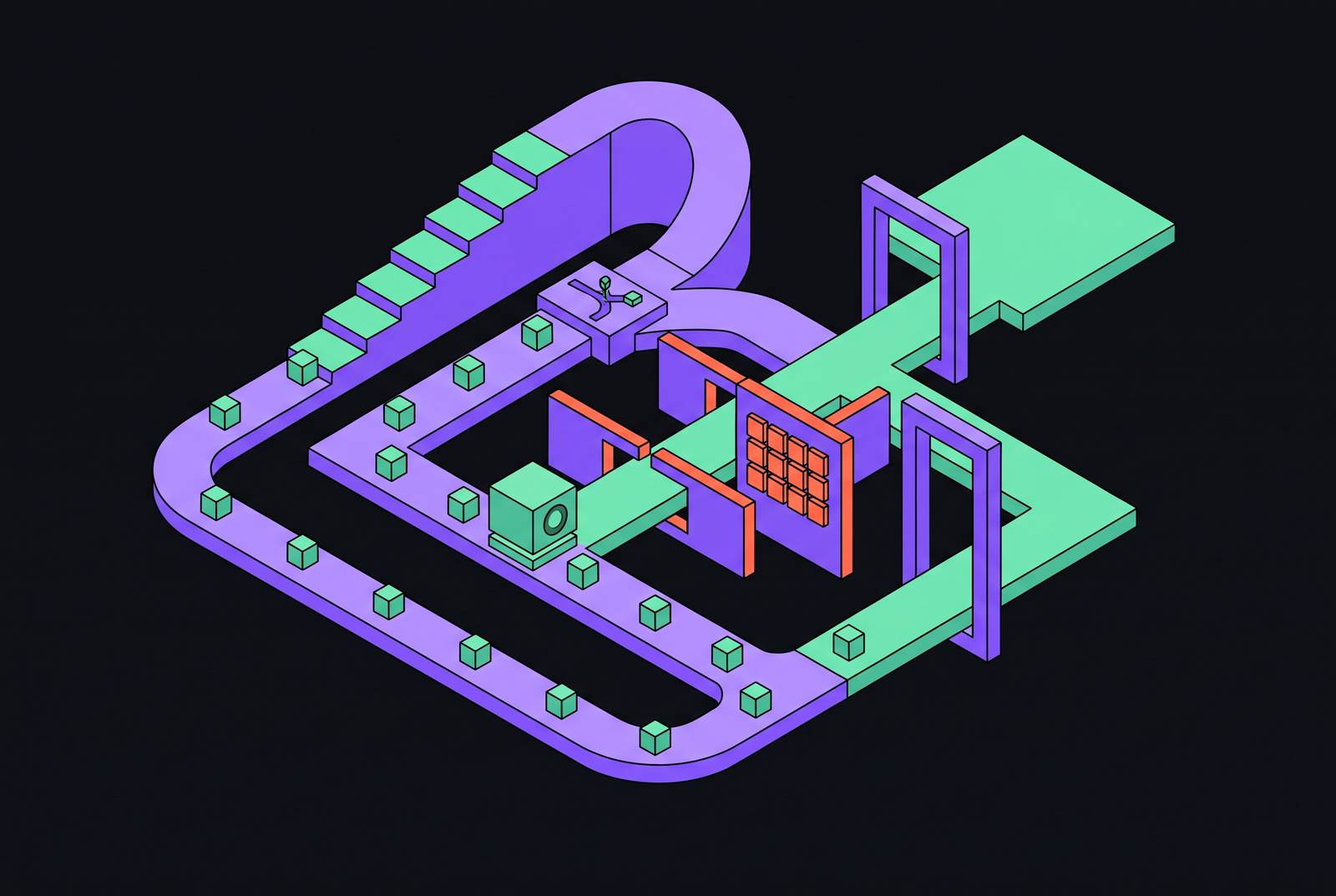
The layers form a decision tree in which each failure follows the branch it needs. Backoff with jitter handles transient errors within an attempt limit. Token delegation with identity rotation handles challenges with a fresh proxy and session on each attempt, while schema-guided re-prompting handles extraction failures. Graceful escalation and site-level circuit-breaking bound the work when those paths cannot recover.
The strongest objection is that better evasion is the wrong long-term abstraction. Credentialed identity gives sites and agents a cleaner way to work together than trying over and over to make agent requests look like human traffic. Web Bot Auth and A2A give that argument substance. An elaborate bypass stack could become engineering investment in a mechanism that official access should eventually replace.
Keep the bridge replaceable. Official API access achieves near-perfect success without resistance, but most data is not exposed that way today. A web scraping API for LLM pipelines needs separate fetch and extraction layers, output cleaned of raw HTML, and limits on how long it tries to recover a request. Consolidating those responsibilities behind clear interfaces reduces what the application team must own. Teams ship faster when they own fewer layers.