Grounding Agent Decisions With Live Web Retrieval
Live web retrieval closes the gap between what models know and what's actually true right now.
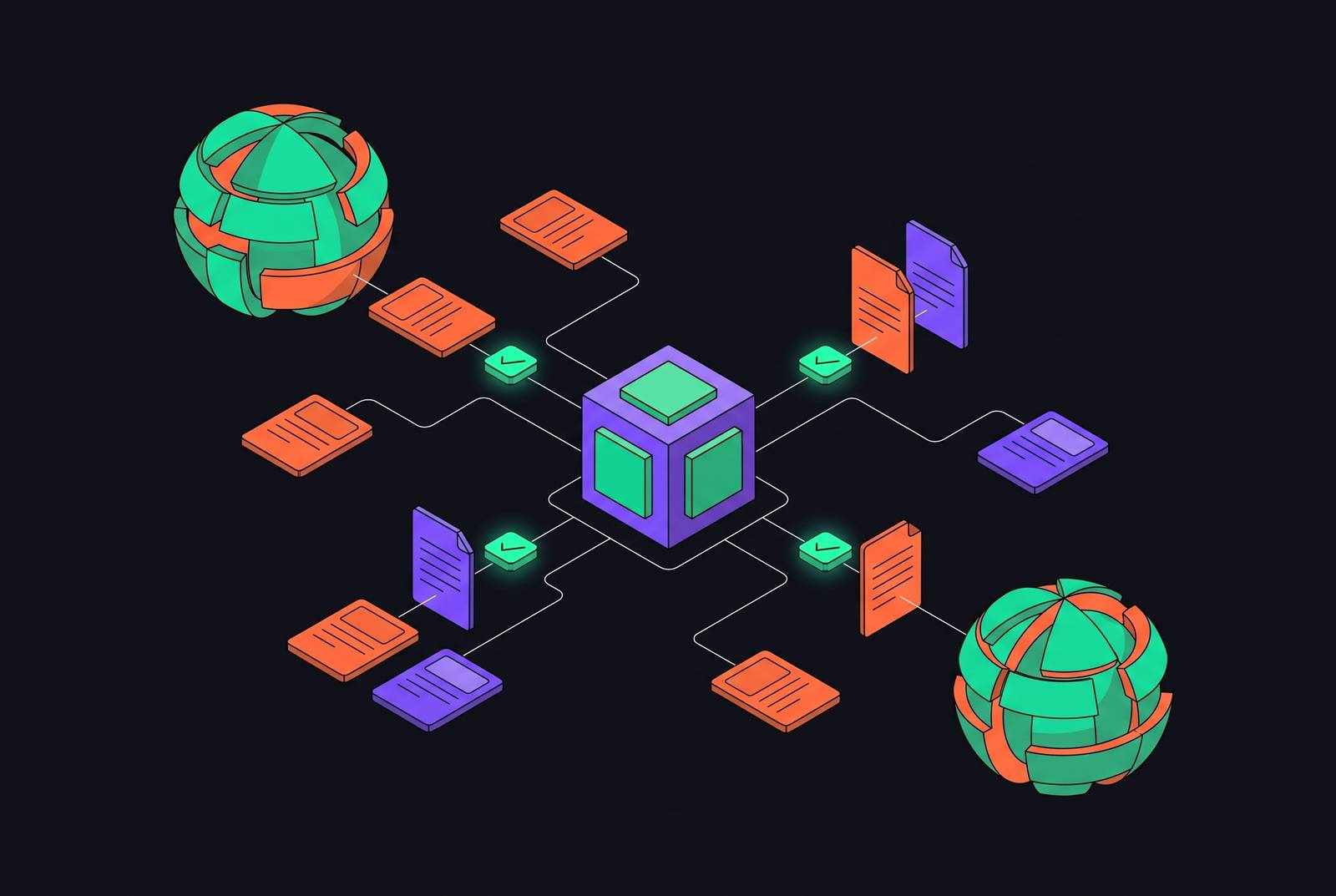
A model's weights are a snapshot, frozen the moment training stopped. A live web page is not. That gap, between what a model knows and what's true right now, is the whole reason grounding exists, and closing it correctly is what separates a useful agent from a dangerous one.
When a model hits a gap in its parametric memory, it doesn't stop and say "I don't know." It confabulates: generates a plausible-sounding detail that fills the hole, delivered with the same confidence as a fact it actually learned. On factual queries without any grounding, hallucination rates are meaningfully high. A significant share of answers can be wrong in a way that actually matters to the person relying on it.
Scale turns that from an annoyance into a liability. Task-specific AI agents are projected to show up in 40% of enterprise applications by the end of 2026, up from under 5% in 2025, and most of those agents will get asked about live state: current prices, current versions, current status. An agent that answers those questions from memory alone is going to be wrong on a schedule, not by accident.
What grounding means and where RAG fits in the architecture
Grounding means constraining a model to answer from evidence handed to it at query time, instead of letting it reach into parametric memory. Done right, the model stops acting like an oracle and starts acting like a fast, literate reader: it summarizes what's in front of it, rather than guessing.
Fine-tuning looks like an answer to freshness. It isn't, and treating it as one is the most common mistake teams make when they first try to solve this problem. Fine-tuning a model on new data is slow and expensive to produce, and the result goes stale within weeks as the underlying knowledge base keeps moving. Retrieval infrastructure doesn't have that problem. Adding new knowledge means adding a document to an index, not retraining a model. That's the core architectural argument for retrieval-augmented generation over baked-in knowledge, and it isn't a close call.
There's a secondary payoff that matters just as much. Because the model pulls from specific, retrievable documents, it can point back to them. Citations aren't a nice-to-have bolted onto RAG; they're a structural consequence of how RAG works, and that matters in regulated industries where an answer needs a paper trail, and for anyone trying to trust what a machine tells them.
Static RAG still leaves a hole open, though. A pipeline that re-indexes nightly is, functionally, answering today's question with yesterday's data, sometimes last month's. For anything time-sensitive, prices, breaking news, live inventory, that lag causes users to receive outdated answers presented as current. It's a design failure.
The three-architecture decision every retrieval pipeline faces before writing a line of code
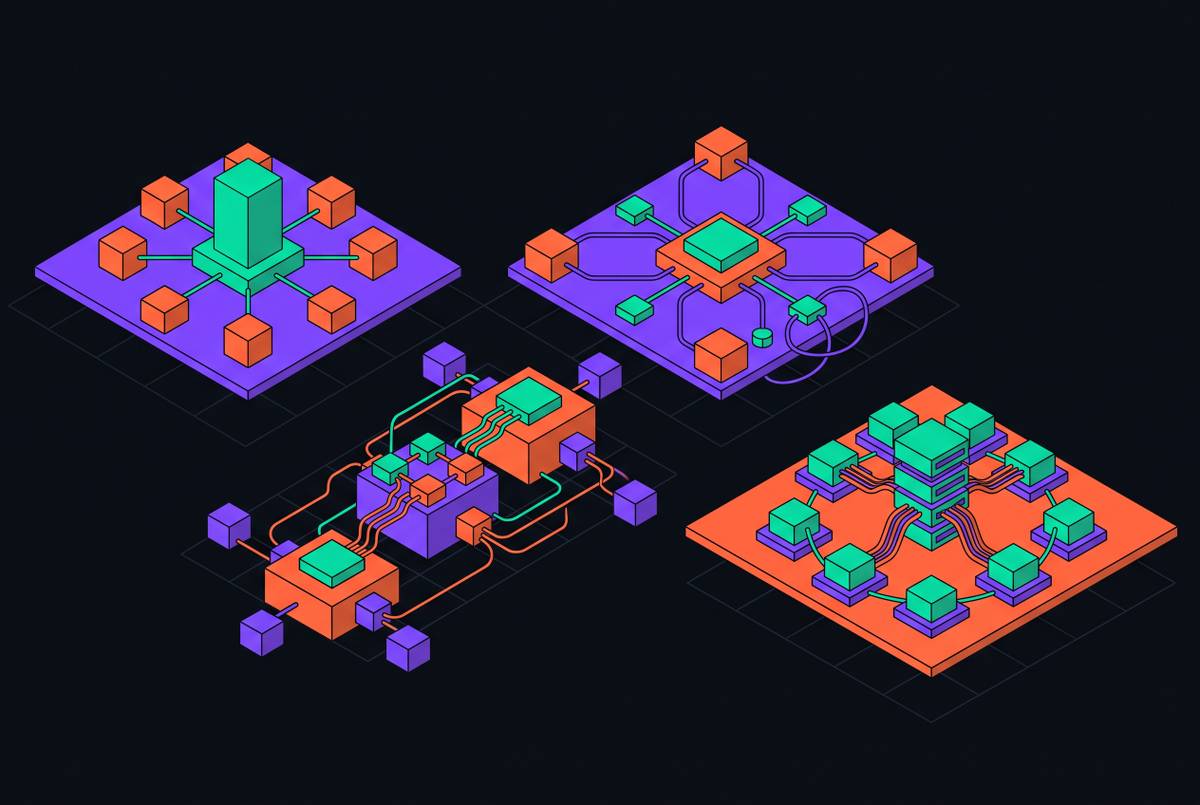
Once a team decides web data needs to reach the model, there are three broad shapes the pipeline can take, and picking one is an architectural decision, not an implementation detail.
Search-first fires a search API call before every generation, no exceptions. It's the simplest to build and reason about, but it's also the least efficient on latency, since every query pays the retrieval tax even when it didn't need to.
Tool-use hands the decision to the model itself: a router decides for each query whether retrieval is worth calling. It's far more efficient when it works, but it lives or dies on the router's judgment. The failure mode is quiet and ugly. The model skips retrieval on a query that actually needed fresh data, and answers confidently from memory instead.
Agentic loops treat retrieval as one move inside a longer, multi-turn plan, where the agent might search, read, search again, and revise before answering. It's the most flexible of the three and also the hardest to evaluate, because a failure can hide anywhere in the chain.
None of these wins by default, but tool-use is the wrong starting point for most teams, because it puts the hardest unsolved problem in the stack, router judgment, in the critical path from day one. Search-first is the boring, correct default until a team has evidence its latency budget can't absorb it. The choice comes down to how much control a team needs over when retrieval fires, how much latency the product can absorb, and how much complexity the team can actually operate and debug in production.
The router, when one exists, becomes a cost lever as much as a quality lever. Not every query needs a live fetch: a question about stable, well-established general knowledge doesn't need the web. But a query with a time word in it ("latest," "current," "as of"), a named entity likely to have recent news attached, a price, or a version number should trigger a fetch. A workable heuristic, when the router is unsure: fetch anyway. A correct answer that took an extra second beats a fast one that's wrong.
Why getting the page is now harder than parsing it
The web changed shape recently, and it changed in a way that makes fetching pages the hard part of the pipeline now, not parsing them. In 2024, automated bots overtook humans as a share of web traffic for the first time in a decade, making up 51% of all traffic on the internet. Site owners noticed, and they responded, fast and hard.
On July 1, 2025, Cloudflare started blocking AI crawlers by default across roughly 20% of the web, and rolled out a pay-per-crawl marketplace in private beta alongside it. By 2025, a growing share of major news sites were blocking AI training bots outright, including OpenAI's GPTBot, the same crawler that, according to Cloudflare,, according to Cloudflare, went from 5% to 30% of AI-crawler request share in twelve months.
The economics explain the backlash better than the traffic numbers do. One widely cited figure has Anthropic's crawler pulling on the order of 38,000 pages for every single visitor it referred back to the site it scraped. Publishers are blocking crawlers that take far more than they give back. Blocking crawlers that take far more than they give back will shape publisher-platform relations more than raw block-rate numbers over the next few years.
Anti-bot systems have gotten correspondingly sophisticated. Modern detection stacks combine IP reputation, TLS fingerprinting, browser-behavior analysis, and rate-pattern monitoring, all running at once, built on the assumption that whoever's on the other end already has a residential IP address and a convincing browser fingerprint. Fetching the page reliably, at scale, is now the harder engineering problem. Parsing it is the easy part by comparison, and any team still budgeting most of its engineering time toward parsing is solving last year's bottleneck.
Turning a fetched page into something a model can reason over
Getting the page is only step one. What's inside that page is usually a mess, and that mess becomes the model's problem if nobody cleans it up first.
A large share of pages on the open web consist substantially of boilerplate: navigation bars, ad slots, footers, cookie banners, related-article widgets. None of that is information. All of it burns tokens and, worse, dilutes the signal the model has to reason over. If the underlying index got built from noisy extraction, the retrieval pipeline was compromised before a single query ran. Noisy chunks produce weak retrieval matches, and weak retrieval sends the model right back to filling gaps from its training data, the exact failure grounding was supposed to prevent.
Format matters here too. Markdown, not raw HTML, is the right target for extracted content: it keeps the structural signal (headings, lists, links) while dropping the markup overhead that costs tokens and adds noise the model has to sift through. Aggressive boilerplate stripping combined with clean Markdown conversion can cut input token usage by 30 to 50% compared to feeding a model raw HTML. Every token freed from junk is a token the model can spend on actual content, a quality gain as much as a cost saving.
Crawl4AI is a useful concrete example of what an LLM-native crawler looks like in practice. It's an open-source Python crawler built specifically for feeding LLM pipelines, designed to render pages with heavy client-side scripting properly. It outputs two versions of every page: raw_markdown is the full converted content, while fit_markdown only gets produced when a content filter is configured to strip low-value sections out. For feeding a model, fit_markdown is almost always the right call. It drops the nav menus, footers, and sidebars, and leaves behind the part of the page a human would actually call "the content."
Injecting retrieved content with provenance so the model can cite what it used
Provenance, tracking exactly which document and which passage an answer came from, is a diagnostic tool, not a nicety. When a model outputs something wrong, provenance tells a team whether the failure happened at retrieval (the wrong page got fetched) or at generation (the right page got fetched, and the model ignored or misread it). Without that distinction, debugging a bad answer is guesswork.
There's a more specific failure provenance catches that's easy to miss otherwise: post-rationalization. A model forms its answer from parametric memory, the exact thing grounding was built to prevent, then bolts a citation onto it after the fact to make the answer look sourced. Research on RAG attribution has found that a substantial share of evaluated citations show exactly this pattern. The model wasn't lying about having a source. It was reasoning backward from an answer it already had, then dressing it up afterward. Without provenance tracking that traces claims back to specific passages, this failure mode stays completely invisible, because the output still looks grounded on its face.
Catching it takes an actual verification step after generation: checking that every claim in the output maps to a specific passage in a retrieved document. Most teams skip this step, because it's extra work and the pipeline seems to run fine without it. Skipping it is a mistake. It's exactly where post-rationalization gets caught, and leaving it out means shipping an agent that occasionally cites sources it never actually used.
Provenance also matters beyond any single answer. For agents that run continuously rather than answering one query and stopping, provenance and audit records are part of the persistent state the agent carries forward, and that state has to survive a rollback if something goes wrong downstream. Treating provenance as a governance requirement, not a debugging convenience, changes how it gets built from the start.
The practical fix is cheap, relatively speaking. A retrieval layer that returns URLs and timestamps alongside content, by default, removes the need to instrument provenance as a separate afterthought. Building it in from day one costs far less than retrofitting it once an agent is already in production and something has gone wrong.
Schema-driven extraction when the agent needs structure, not prose
Sometimes an agent needs not a paragraph but a field, a price, a date, a product name, slotted into a structure a downstream system can actually use. That's schema-driven extraction, and it's a different problem from summarizing a page, with its own failure modes.
Two related tasks get lumped together here and shouldn't be. Schema extraction fills a structure the developer already defined in advance. Entity extraction identifies people, organizations, prices, and dates without any predefined schema. Both are useful, and both break in their own way once volume goes up.
Schema extraction is hard specifically because the open web wasn't built to cooperate with it. Most sites skip semantic markup, ignore accessibility standards, obfuscate their HTML structure, and generate dynamic identifiers that change from one page load to the next. The structure a developer wants rarely matches the structure the page actually exposes, and that mismatch is where most extraction pipelines quietly fail.
The gap between flashy and effective appears in the WebLists benchmark, where state-of-the-art web agents managed only 31% recall on structured extraction tasks. A record-and-replay system built on CSS selectors, a far less flashy approach, hit 66% on the same task, more than double the LLM agent's score. General-purpose LLM agents also cap out at a few thousand tokens of output, which makes large-scale extraction flatly infeasible without wrapping the model in a programmatic loop that handles pagination and batching outside the model itself. LLMs aren't useless here; the raw agent, unassisted, is the wrong tool for volume extraction.
A system called PARSE shows what closing that gap looks like in practice. It combines autonomous JSON schema optimization for LLM consumption, a component called ARCHITECT, with reflection-based extraction backed by both static and LLM-based guardrails, a component called SCOPE. The results include up to a 64.7% improvement in extraction accuracy on the SWDE benchmark, a 10% combined improvement across models from the full framework, and a 92% reduction in extraction errors within the first retry alone. Most of the error reduction happens on that very first correction pass, which says the guardrail architecture catches the right class of mistakes early, before they compound into something harder to fix downstream.
How orchestration patterns show whether the retrieval loop holds under real workloads
Every piece covered so far, routing, fetching, cleaning, provenance, schema extraction, has to run inside some orchestration pattern that decides when each step fires and what happens when one of them fails. Whether the retrieval loop survives contact with a real, messy, high-volume workload, rather than just a clean demo, depends on that pattern.
A pipeline that works flawlessly on ten test queries can fall apart at ten thousand, because the orchestration around it never accounted for partial failures, rate limits, or a router making the wrong call under load. The architecture decisions made earlier, search-first versus tool-use versus agentic loop, aren't just about accuracy on a single query. They're about what the system does when a fetch times out, when a page comes back blocked, when a schema extraction returns malformed JSON, and when provenance can't be traced back to a source.
None of that is optional infrastructure, and treating it as an afterthought is how demos turn into production incidents. A retrieval pipeline that holds up in production answers real queries, at real volume, about a world that keeps changing underneath it. A demo just answers the queries someone thought to test.